




What's Happening?
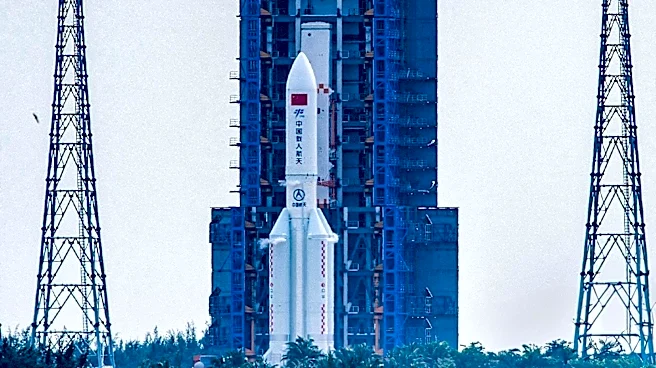
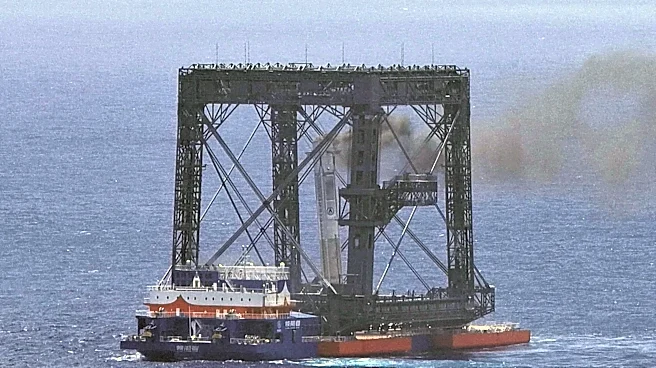
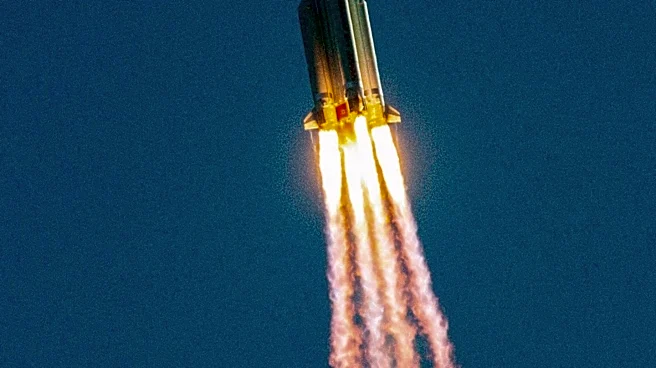
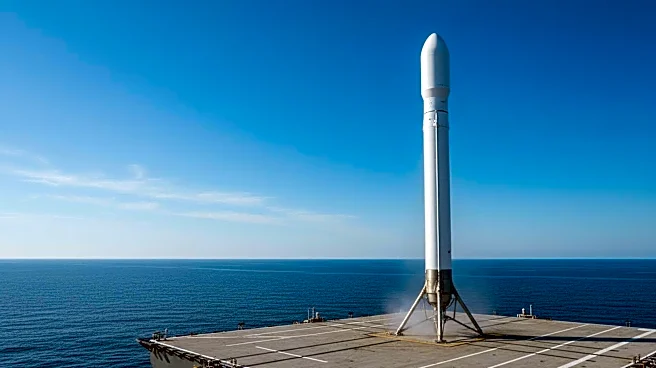
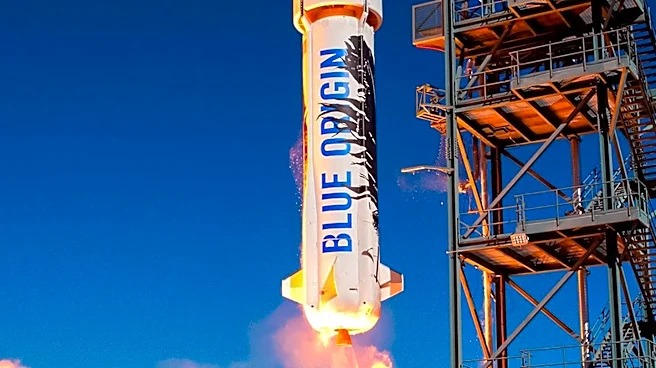
China has successfully landed the booster stage of its Long March-10B reusable rocket, marking a significant milestone in its space program. This achievement places China alongside SpaceX and Blue Origin as one of the few organizations capable of landing
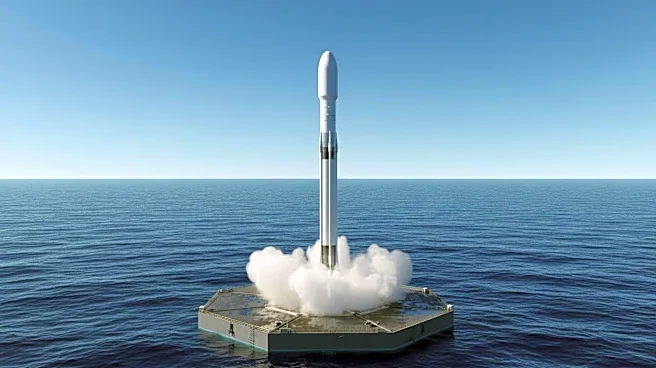
a rocket booster. The Long March-10B's first stage was recovered using a sea-based net, reportedly the world's first 'net-based recovery' of a rocket. This development is a major step towards reusable launch capabilities, which are crucial for reducing the costs associated with space travel. SpaceX, led by Elon Musk, has been a pioneer in this field, having landed its first booster in 2015 and continuing to recover its Falcon 9 rockets successfully. China's advancement in reusable rocket technology is seen as a move to catch up with SpaceX, which currently leads in launching materials into orbit.
Why It's Important?
The successful landing of China's Long March-10B rocket booster represents a significant leap in the global space race, particularly in the realm of reusable rocket technology. This development could potentially lower the costs of space exploration and satellite deployment, making space more accessible. For the U.S., this poses a competitive challenge as China aims to rival SpaceX's dominance in the space industry. SpaceX's advancements have set a high bar, with its Falcon 9 and Starship rockets capable of carrying heavier payloads. However, China's progress indicates a growing capability that could impact the U.S. space sector, potentially influencing government contracts, commercial satellite launches, and international collaborations.
What's Next?
China's continued investment in reusable rocket technology suggests further advancements and potential competition with U.S. companies like SpaceX. As China aims to expand its capabilities, it may seek to increase its payload capacity and improve its satellite deployment strategies. This could lead to more competitive pricing and options in the global satellite internet market, challenging SpaceX's Starlink service. The U.S. space industry may need to innovate further to maintain its competitive edge, potentially leading to new technological developments and strategic partnerships.