





What's Happening?
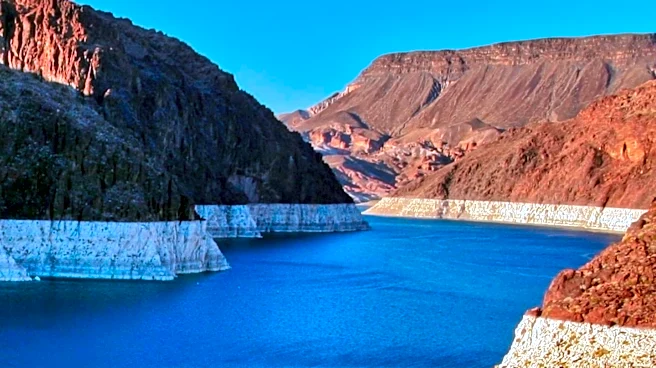
Groundwater reserves in the Colorado River Basin are disappearing at an accelerated rate, with an unprecedented pattern of loss, according to research from Virginia Tech utilizing NASA's Gravity Recovery and Climate Experiment satellite mission data.
Historically, groundwater depletion was more pronounced in the Lower Basin. However, the system has reached a turning point, with the Upper Basin now experiencing rapid groundwater losses. From 2020 to 2022, during a severe drought, the Upper Basin lost approximately 4.6 trillion gallons (17.4 trillion liters) of groundwater, nearly double the 2.5 trillion gallons (9.5 trillion liters) lost in the Lower Basin. This shift indicates that surface-water shortages are increasingly impacting groundwater in the Upper Basin, a region previously considered more resilient due to its snowmelt-driven recharge. The findings, published in Water Resources Research, highlight that groundwater is not tracking surface-water shortages in the same manner across both basins.
Why It's Important?
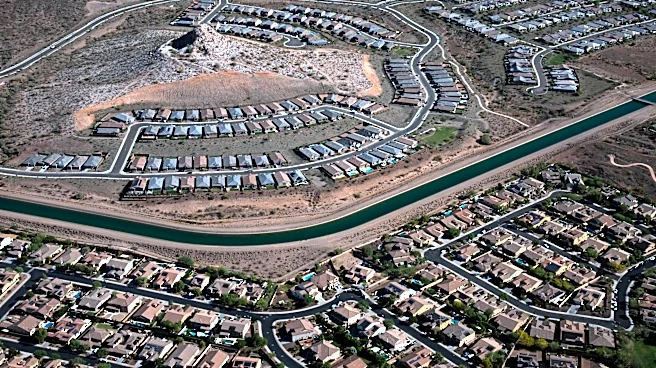
The accelerated and shifting pattern of groundwater depletion in the Colorado River Basin has significant implications for the approximately 40 million people and extensive agricultural operations that rely on its water. Groundwater serves as a critical buffer against surface water shortages, but its continued depletion, particularly in the Upper Basin, could further reduce its contributions to rivers. This intensifies the feedback loop between groundwater loss and surface-water shortages, exacerbating water scarcity in the region. The study underscores that relying solely on surface water monitoring is insufficient for effective water management. Protecting the Colorado River Basin now requires integrated management of both above-ground and below-ground water resources to ensure long-term water security for communities and industries in the American Southwest.
What's Next?
The findings necessitate a re-evaluation of water management strategies across the Colorado River Basin. Policymakers and water authorities will likely need to implement more comprehensive approaches that account for the interconnectedness of surface and groundwater. This could involve stricter regulations on groundwater pumping, increased investment in water conservation technologies, and the development of sustainable recharge programs. Further research will be crucial to understand the long-term hydrological impacts of this new depletion pattern and to forecast future water availability. Stakeholders, including agricultural producers, urban water providers, and environmental groups, will need to collaborate on adaptive management plans to mitigate the effects of continued groundwater loss and ensure the basin's resilience against future droughts.
Beyond the Headlines
The unprecedented groundwater loss in the Colorado River Basin highlights a broader challenge in water resource management across arid and semi-arid regions globally. The shift in depletion patterns in the Upper Basin, traditionally seen as more robust, suggests that even seemingly resilient water systems are vulnerable to prolonged drought and climate change. This situation could lead to increased competition for water resources, potentially sparking interstate or inter-sectoral conflicts. Furthermore, the reliance on satellite data for monitoring subsurface water changes emphasizes the growing importance of advanced technological tools in environmental management. The ethical implications of water allocation in a severely stressed basin, balancing agricultural needs with urban demands and ecological preservation, will become increasingly complex, requiring innovative governance models and equitable distribution policies.