



What's Happening?
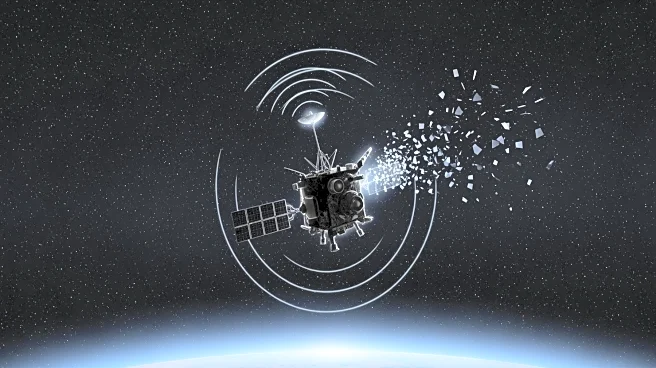
NASA's Mars Atmosphere and Volatile EvolutioN (MAVEN) spacecraft has lost communication with Earth after its orbit took it behind Mars on December 6th. The Deep Space Network has been unable to re-establish contact with the orbiter, which was launched
in November 2013. MAVEN is crucial for relaying data from Mars' surface to Earth, particularly from the active rovers. The loss of communication is significant as MAVEN, despite being relatively new compared to other Mars orbiters like the Mars Reconnaissance Orbiter and Mars Odyssey, plays a vital role in scientific research. Engineers are currently troubleshooting the issue, but options are limited without a signal from the spacecraft.
Why It's Important?
The loss of MAVEN's communication capabilities poses a significant challenge to ongoing and future Mars research. MAVEN's role in relaying data is critical for the success of ground-based science missions and any potential manned missions to Mars. With other orbiters either too old or not ideally positioned to take over MAVEN's functions, the scientific community faces a potential gap in data transmission. This situation underscores the need for a replacement orbiter to ensure continuity in Mars exploration and research. The inability to communicate with MAVEN could delay scientific discoveries and impact the planning of future missions.
What's Next?
NASA engineers are working to restore communication with MAVEN, but even if successful, the spacecraft has limited fuel remaining, emphasizing the urgency for a replacement. The potential for a new orbiter, such as the previously canceled Mars Telecommunications Orbiter, may be revisited to fill the gap left by MAVEN. The scientific community and NASA will need to assess the feasibility and funding for such a mission to maintain the flow of data from Mars. The outcome of these efforts will be crucial for the continuity of Mars exploration and the success of future missions.