






What's Happening?
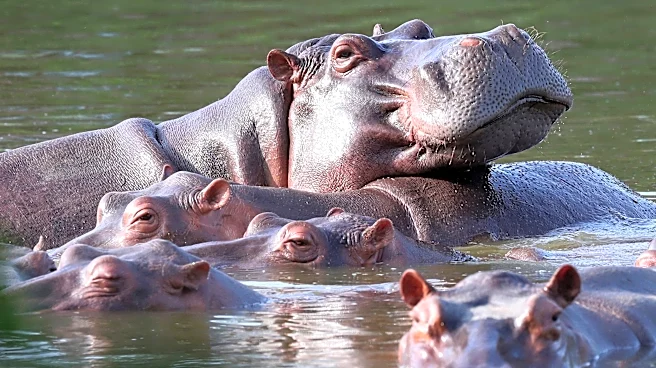
Colombian officials have authorized a plan to euthanize dozens of hippos that have been roaming freely in the country, a legacy of the infamous drug lord Pablo Escobar. These hippos, often referred to as 'cocaine hippos,' were originally brought to Colombia by
Escobar in the 1980s as part of his private zoo. Over the years, the hippo population has grown significantly, posing threats to local ecosystems and communities. Environment Minister Irene Vélez stated that previous efforts to control the population, such as neutering and relocation, have been costly and largely ineffective. The government plans to cull up to 80 hippos to preserve local ecosystems and prevent further displacement of native species. The hippos have been declared an invasive species, and their presence has led to competition with local wildlife for resources.
Why It's Important?
The decision to euthanize the hippos highlights the ongoing challenges of managing invasive species and the ecological impact of human actions. The hippos have become a significant environmental concern in Colombia, affecting local biodiversity and posing risks to human safety. The plan has sparked controversy, with animal welfare activists opposing the culling, arguing that it sets a negative precedent for a country with a history of internal conflict. The situation underscores the complexities of balancing ecological preservation with ethical considerations in wildlife management. The hippos have also become a tourist attraction, contributing to local economies, which adds another layer of complexity to the decision.
What's Next?
The Colombian government has not specified when the culling will begin, but the decision is likely to face legal and public challenges from animal rights groups and local communities. The government may need to engage in further dialogue with stakeholders to address concerns and explore alternative solutions. The international community may also weigh in, given the global interest in wildlife conservation and ethical treatment of animals. The outcome of this situation could influence future policies on managing invasive species and wildlife conservation in Colombia and beyond.