







What's Happening?
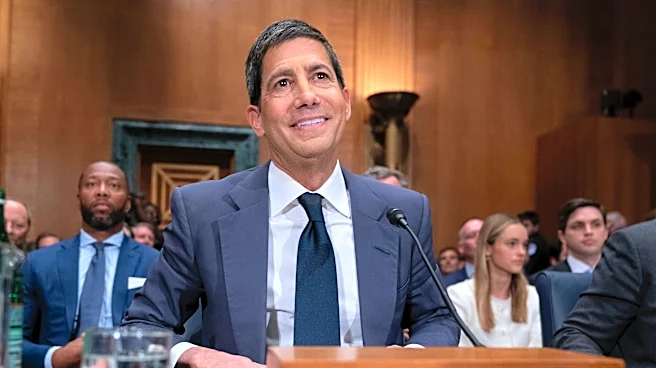
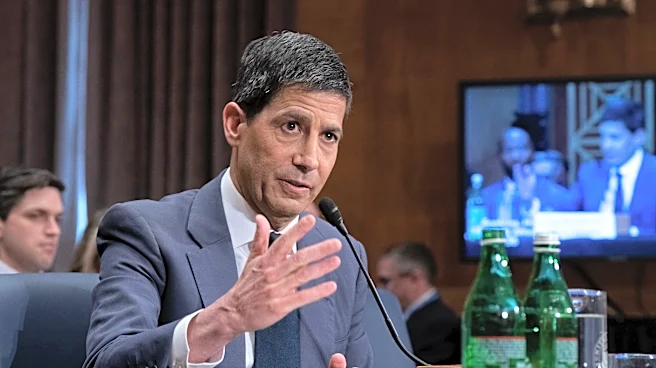
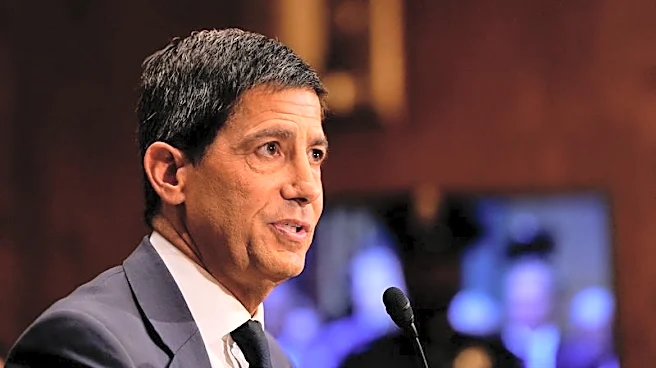
The Senate Banking Committee has approved Kevin Warsh's nomination to become the next Federal Reserve chair, marking a significant step toward his confirmation. This decision follows Sen. Thom Tillis (R-North Carolina) dropping his block of the nominee
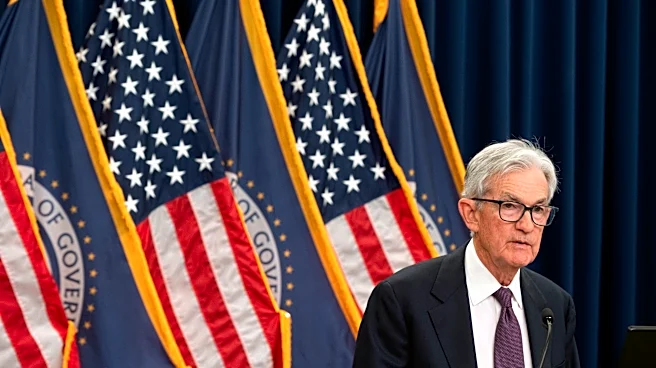
after the Justice Department closed a criminal investigation into outgoing Chair Jerome H. Powell. Warsh, a former Fed governor and Morgan Stanley banker, is set to succeed Powell, whose term expires on May 15. Warsh has pledged independence from the White House, despite President Trump's expectations for immediate interest rate cuts. The committee's vote was along party lines, 13-11, and Warsh's confirmation by the full Senate is anticipated given the Republican majority.
Why It's Important?
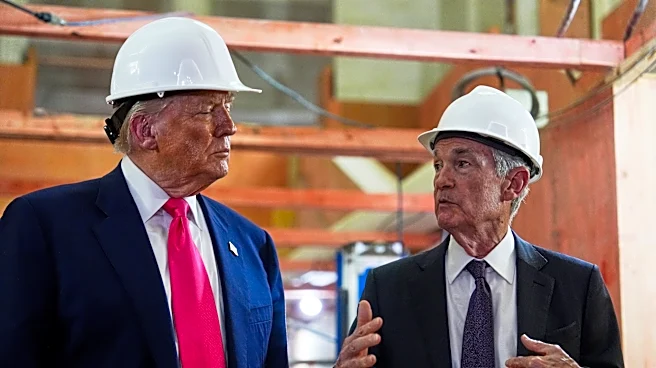
Kevin Warsh's potential confirmation as Federal Reserve chair is crucial as it represents President Trump's effort to reshape the central bank's leadership. Warsh's agenda includes significant changes in how the Fed communicates with the public, which could impact market stability and political interactions. His approach may lead to more surprises in market reactions, contrasting with the current practice of telegraphing rate moves. Warsh's criticism of the Fed's recent leadership and his views on inflation and monetary policy could influence the central bank's future direction, particularly in achieving the 2 percent inflation target. His confirmation would be a victory for Trump, who has criticized the Fed's rate policies.
What's Next?
If confirmed, Warsh will implement his ambitious agenda at the Fed, including reshaping communication strategies and potentially reducing the Fed's bond portfolio. His approach may lead to increased market volatility and political confrontation. Warsh's focus on returning inflation to the 2 percent target will be a priority, as the central bank has missed this goal for several years. The full Senate vote on his confirmation is expected soon, given the Republican majority. Warsh's leadership could redefine the Fed's role in addressing broader issues like climate and inequality, which he believes have made the institution a political target.
Beyond the Headlines
Warsh's confirmation could trigger long-term shifts in the Fed's operations and its interaction with political entities. His criticism of the Fed's involvement in non-core issues like climate and inequality suggests a potential narrowing of the central bank's focus. This could lead to changes in how the Fed is perceived by the public and policymakers. Warsh's approach to communication and policy decisions may influence the Fed's transparency and its relationship with financial markets. The implications of his leadership could extend beyond monetary policy, affecting broader economic and political dynamics.