







What's Happening?
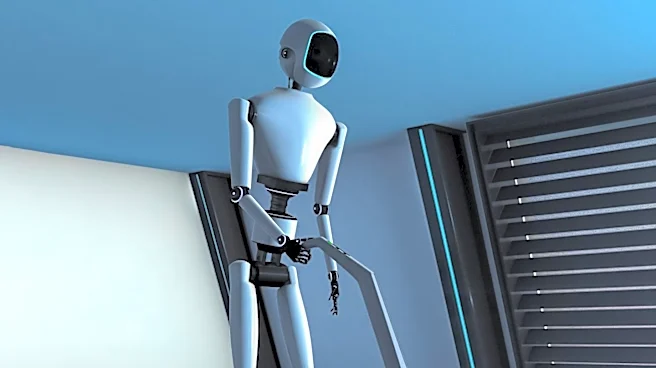
Tau Robotics is advancing the development of humanoid robots designed for apartment cleaning tasks. A recent demonstration involved a robot attempting to clean an apartment, showcasing both its capabilities and current limitations. The robot, operated
remotely by human pilots, encountered difficulties with stairs, exhibiting a 'drunken stagger' due to signal transmission delays. During one cleaning session, the robot stalled repeatedly, initially attributed to overheating, but later found to be caused by the human controller's equipment shutting down due to heat. These robots utilize kinematic guidance, where human pilots perform motions that sensors transmit to the robot, allowing it to copy and learn. This process generates valuable training data for Tau's AI models, aiming for future autonomous operation. While the long-term goal is fully autonomous cleaning robots, current models require significant human assistance and remote piloting. The company is actively optimizing timings and connectivity to improve robot coordination and performance.
Why It's Important?
The development by Tau Robotics signifies a step forward in the practical application of humanoid robots in domestic settings, potentially transforming the service industry. The ability of robots to perform complex tasks like cleaning toilets and mopping floors, even with human assistance, indicates a shift towards more integrated robotic solutions in daily life. This advancement could lead to increased efficiency in household chores and create new job roles in robot piloting and maintenance. However, the current reliance on remote human operation and the technical challenges encountered highlight the significant hurdles that remain before widespread autonomous deployment. The data collection process, where human-guided tasks train AI models, is crucial for the evolution of these robots, impacting the future of artificial intelligence and machine learning in real-world environments. Success in this area could pave the way for humanoid robots in various other service sectors.
What's Next?
Tau Robotics will likely continue to focus on refining its AI models and improving the autonomy of its humanoid cleaning robots. This will involve collecting more training data through human-piloted cleaning sessions and optimizing the robots' hardware and software to overcome current limitations such as navigation on stairs and signal transmission delays. The company will need to address issues like overheating of control equipment and enhance the robots' ability to operate in varied environmental conditions. Future developments may include more advanced sensor integration for better environmental perception and improved motor control for smoother movements. As the technology matures, Tau Robotics could expand its services to a wider market, potentially offering subscription-based robot cleaning services. The progress of companies like Tau Robotics will also influence broader industry trends in humanoid robot development and their integration into everyday life.
Beyond the Headlines
The emergence of humanoid robots for domestic tasks raises several deeper implications beyond immediate functionality. Ethically, the increasing presence of robots in personal spaces could lead to discussions about privacy, data collection, and the nature of human-robot interaction. The reliance on remote human pilots for 'autonomous' robots also blurs the lines between automation and human labor, potentially creating new forms of remote work and oversight. Legally, questions may arise regarding liability in case of damage or malfunction during robot operation. Culturally, the integration of humanoid robots into homes could alter societal perceptions of labor, convenience, and the role of technology in daily life, moving closer to futuristic visions like 'The Jetsons.' The extensive data collection from these cleaning tasks also presents opportunities and challenges related to data security and the development of more sophisticated AI that learns from human actions in real-time.