



What's Happening?
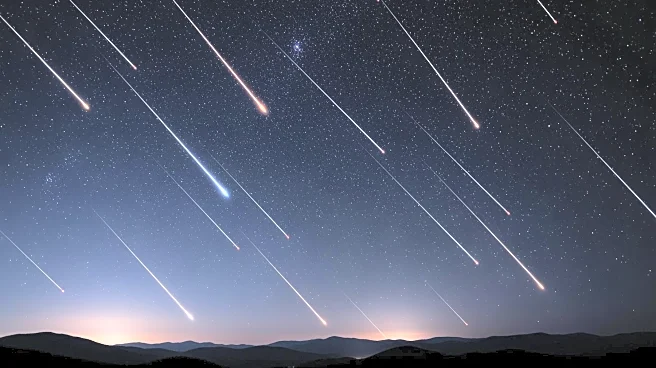
The Geminid meteor shower, known for its bright and reliable display, is set to peak on the night of December 13th into the early hours of December 14th. Observers in North America are expected to have the best viewing opportunities, with the shower's
radiant located near the star Castor in the constellation Gemini. The event is anticipated to produce a high number of meteors, with optimal viewing conditions due to minimal moonlight interference. The Geminids originate from the asteroid 3200 Phaethon, unlike most meteor showers that come from comets. This year's peak coincides with a waning crescent moon, ensuring excellent visibility for stargazers.
Why It's Important?
The Geminid meteor shower is significant as it provides one of the most dependable and visually impressive meteor displays of the year. Its occurrence offers a unique opportunity for both amateur and professional astronomers to observe and study meteors originating from an asteroid, which is less common compared to those from comets. The event also serves as an engaging way to promote interest in astronomy and the natural sciences among the public, encouraging outdoor activities and educational opportunities related to celestial phenomena.
What's Next?
Following the peak of the Geminids, observers can continue to enjoy meteor activity in the nights leading up to and following the peak, as the shower gradually diminishes. The event sets the stage for the upcoming Ursid meteor shower, which will peak later in December. Astronomers and enthusiasts will likely continue to monitor and document the Geminids, contributing to ongoing research and understanding of meteor showers and their origins.