






What's Happening?
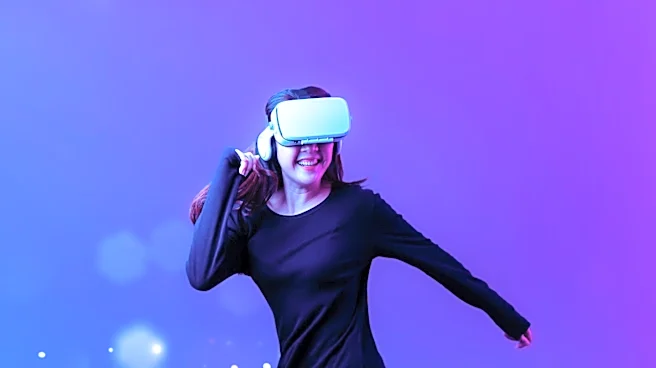
A new virtual reality (VR) training series titled 'PCB Hand-Soldering Basics' is revolutionizing how individuals learn soldering. This series utilizes Gaussian splats, a 3D content display method, to provide an unprecedented level of detail and interactivity.
Unlike traditional 3D videos, Gaussian splats allow viewers to freely examine soldering processes from any angle, zoom in on fine details of components, the soldering iron, and the printed circuit board (PCB). The educational production was developed in collaboration with the Department of Electrical and Electronic Engineering at Imperial College London, with the goal of offering a unique, front-row perspective on hand soldering, enabling users to observe the process in 3D from any desired viewpoint.
Why It's Important?
This innovative application of VR technology holds significant importance for technical education and skill development, particularly in fields requiring intricate manual dexterity like electronics manufacturing and repair. By providing an immersive and highly detailed learning environment, the series can accelerate the learning curve for aspiring technicians and engineers, reducing the time and resources typically needed for hands-on training. The ability to view processes from multiple angles and close-up can help learners grasp complex techniques more effectively, potentially leading to higher quality work and fewer errors in real-world applications. This approach could also make specialized skills more accessible to a broader audience, overcoming geographical barriers and the limitations of traditional classroom settings. The adoption of such technologies could set a new standard for vocational training across various industries.
What's Next?
The success of this VR soldering series could pave the way for similar immersive training programs in other technical and manual skill-based fields. Educational institutions and vocational schools may begin to integrate Gaussian splat-based VR content into their curricula, recognizing its potential to enhance learning outcomes. Developers might explore expanding the series to cover more advanced soldering techniques or other electronics assembly processes. Furthermore, the technology could be adapted for corporate training programs, allowing companies to upskill their workforce efficiently and cost-effectively. The increasing accessibility of VR hardware could also drive wider adoption of these training methods, making high-quality technical education more widespread. Future iterations might also incorporate interactive elements, allowing users to simulate actions within the VR environment.
Beyond the Headlines
Beyond its immediate application in soldering, this VR training method signifies a broader shift in how complex skills are acquired and disseminated. It challenges traditional pedagogical approaches by offering a highly personalized and self-paced learning experience that caters to different learning styles. The use of Gaussian splats, known for their computational efficiency and visual fidelity, could democratize access to specialized knowledge, potentially bridging skill gaps in various industries. This technology also raises interesting questions about the future of remote work and training, where individuals could acquire hands-on expertise without needing physical presence. The ethical implications of virtual skill acquisition, such as ensuring practical proficiency translates to real-world competence, will also become a topic of discussion as these technologies mature.