








What's Happening?
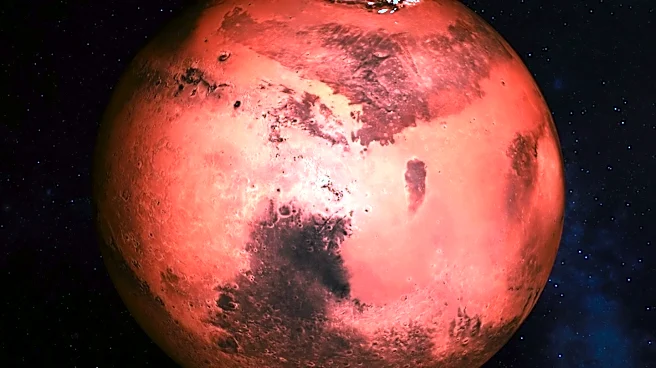
This week, stargazers have the opportunity to witness a rare conjunction between Mars and Uranus. The two planets will appear close together in the sky, with Mars passing just 0.1° south of Uranus in the constellation Taurus. This celestial event will be visible
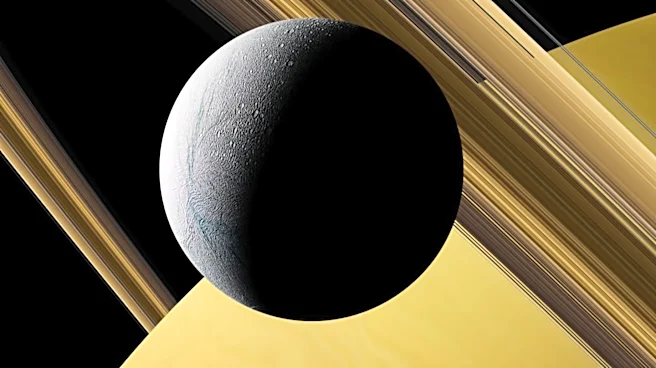
in the early morning hours of July 4, with Mars easily visible to the naked eye and Uranus requiring optical aid due to its faintness. The conjunction provides a chance for amateur astronomers to observe Uranus, which is typically difficult to spot without a telescope. Additionally, the week features other astronomical events, including the opposition of asteroid 18 Melpomene and the visibility of Saturn's largest moon, Titan.
Why It's Important?
The conjunction of Mars and Uranus is significant for both amateur and professional astronomers as it offers a rare chance to observe Uranus in proximity to a brighter planet. Such events help increase public interest in astronomy and provide educational opportunities for those learning about the solar system. The visibility of Uranus, often obscured by its distance and faintness, allows for better public engagement with planetary science. Moreover, the occurrence of multiple astronomical events in a single week highlights the dynamic nature of the night sky and encourages ongoing observation and study.
What's Next?
Following the conjunction, Mars and Uranus will gradually move apart, but both will remain visible in the night sky for some time. Observers are encouraged to continue tracking their movements, as well as other celestial events such as the opposition of asteroids and the visibility of Saturn's moons. These events provide ongoing opportunities for observation and study, fostering a deeper understanding of our solar system. Additionally, the continued visibility of these planets and asteroids may inspire further interest in astronomy and related sciences.