









What's Happening?
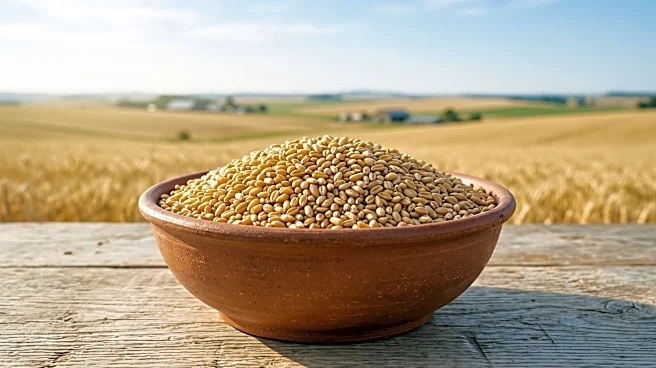
The National Wheat Foundation has revealed the 24 national winners of its 2026 National Wheat Yield Contest, representing 10 states. These winners achieved an average yield of 146.4 bushels per acre. Anne Osborne, Executive Director at the National Wheat Foundation,
highlighted that the contest evaluates not only yield but also quality, with top quality awards to be announced later. Montana and Washington each had four national winners. In addition to the national accolades, the contest recognized four winners in a pilot digital yield category and 71 state winners from 22 states, who averaged nearly 135 bushels per acre in traditional categories. The winners will be honored at the Commodity Classic on March 2nd in New Orleans.
Why It's Important?
The National Wheat Yield Contest plays a significant role in advancing wheat production practices across the United States. By recognizing high-achieving farmers, the contest encourages the adoption of innovative techniques, superior varieties, and effective management practices that lead to increased yields and improved grain quality. This competition fosters a spirit of innovation and knowledge sharing within the agricultural community, ultimately contributing to the economic viability of wheat farming. The focus on both yield and quality ensures that advancements benefit not only farmers' profitability but also the overall value and marketability of U.S. wheat, which is crucial for both domestic consumption and international trade. The contest also serves as a benchmark for progress and potential in the wheat industry.
What's Next?
The next step for the national winners involves the analysis of their wheat samples by labs, with an expert panel reviewing the results to determine top quality awards. These additional awards will be announced on January 22nd. All winners, including national and state honorees, will be recognized at the Commodity Classic in New Orleans on March 2nd. The insights gained from the contest, particularly regarding successful production practices and high-performing varieties, are expected to be shared with the broader farming community. This dissemination of knowledge will help other wheat growers improve their own yields and quality, contributing to the continuous advancement of the U.S. wheat industry.
Beyond the Headlines
Beyond the immediate recognition of high yields, the National Wheat Yield Contest subtly influences agricultural research and development. The success of certain varieties and practices in the contest can guide seed companies and universities in their breeding programs and agronomic studies, focusing on traits that contribute to both high yield and quality. The inclusion of a pilot digital yield category also signals a growing trend towards integrating technology and data analytics into farming, pushing the industry towards more precise and efficient methods. This long-term impact extends to national food security, as consistent improvements in wheat production contribute to a stable and abundant food supply, while also enhancing the competitiveness of U.S. agricultural exports in the global market.