







What's Happening?
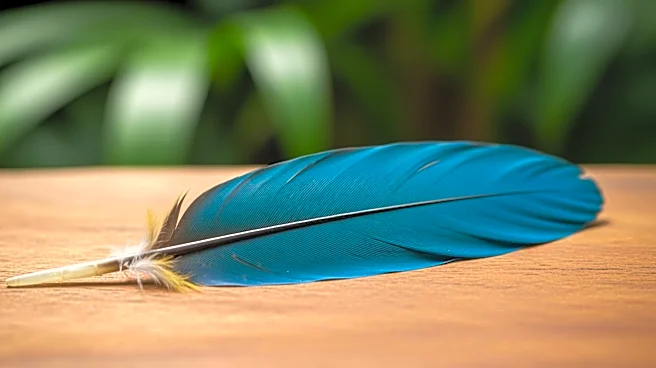
In a significant conservation effort, Brazil's blue-and-yellow macaws have been reintroduced to Rio de Janeiro's Tijuca National Park after a 200-year absence. The initiative, led by Refauna, aims to restore the ecological balance by reintroducing species
that were lost due to deforestation and wildlife trade during European colonization. The macaws, known for their vibrant colors and intelligence, are part of a broader 'refaunation' project that includes other species like the red-rumped agouti and brown howler monkey. The project seeks to rebuild ecological relationships and enhance biodiversity in the park.
Why It's Important?
The reintroduction of the macaws is a crucial step in restoring the Atlantic rainforest's ecological integrity. These birds play a vital role in seed dispersal, which is essential for forest regeneration. The project not only aims to bring back lost species but also to reestablish the ecological functions they perform, thereby supporting the overall health of the ecosystem. This initiative highlights the importance of biodiversity conservation and the potential for successful rewilding efforts to reverse the impacts of historical deforestation and wildlife exploitation.
What's Next?
Refauna plans to release more macaws in the coming months, with a goal of eventually having 50 birds in the park. The success of the project will depend on the macaws' ability to adapt to the wild, as they were previously in captivity. Continuous monitoring and training are essential to ensure their survival and integration into the ecosystem. The project also involves educating park visitors to prevent interactions that could disrupt the birds' natural behaviors.