
What's Happening?
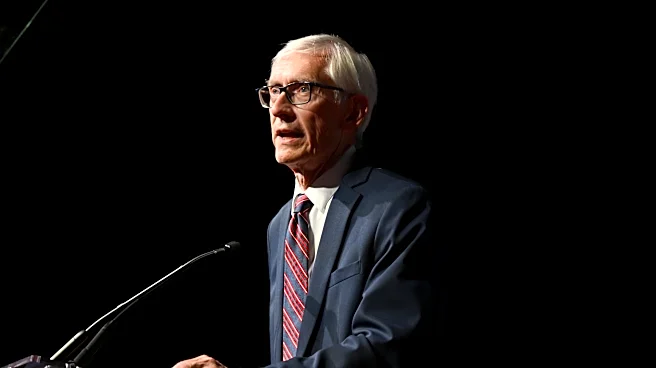
Indiana Governor Mike Braun visited the Indiana State Police (ISP) Fort Wayne Post to observe firsthand the application of cutting-edge technology in solving cold cases. During his visit, Governor Braun met
with investigators and forensic scientists who are utilizing advanced methods to bring resolution to long-unsolved crimes and provide answers to victims' families. The Governor toured the ISP Fort Wayne Regional Laboratory, where he witnessed how advancements in forensic science are aiding in the resolution of decades-old cases. He also engaged with members of the ISP Cold Case Unit, including First Sergeant Jeffrey Coffey, the unit's commander, and retired ISP Captain Kevin Smith, who now serves as a civilian investigator. Established in 2024, this specialized unit comprises five detectives and five civilian investigators strategically located across Indiana, dedicated to pursuing unsolved homicides and missing persons cases. Governor Braun emphasized that public safety is a top priority and that time should not impede justice, expressing pride in the ISP's efforts to leverage new technology and follow every lead.
Why It's Important?
Governor Braun's support for advanced forensic technology in solving cold cases underscores a significant commitment to public safety and justice in Indiana. The utilization of cutting-edge methods, such as forensic genetic genealogy, represents a pivotal shift in how law enforcement approaches long-unsolved crimes. This initiative provides renewed hope for families of victims who have waited decades for answers, potentially bringing closure and accountability. By investing in and promoting these technologies, Indiana is positioning itself at the forefront of criminal investigation, demonstrating that the passage of time will not deter the pursuit of justice. The establishment of a dedicated Cold Case Unit, staffed by experienced detectives and civilian investigators, further solidifies this commitment, ensuring that resources are specifically allocated to these challenging cases. This approach not only aims to solve past crimes but also sends a strong message to criminals that they will be pursued, regardless of how much time has elapsed, thereby enhancing overall public safety and trust in the justice system.
What's Next?
The Indiana State Police Cold Case Unit, bolstered by Governor Braun's support, will continue to expand its use of advanced forensic technologies, including forensic genetic genealogy, to investigate unsolved homicides and missing persons cases across the state. The unit, established in 2024 with five detectives and five civilian investigators, is expected to intensify its efforts in reviewing and re-examining evidence from decades-old crimes. Further investment in training for investigators and forensic scientists on these new techniques is likely. The success of recent cases, such as the 1986 LaGrange and Steuben County sexual assaults and the 1997 Angela Saco homicide, demonstrates the potential for more breakthroughs. Law enforcement agencies in Indiana will likely continue to collaborate with forensic laboratories to integrate these advanced methods into standard investigative protocols. This ongoing commitment aims to deliver justice for victims and their families, ensuring that even the most challenging cold cases receive renewed attention and resources.
Beyond the Headlines
The emphasis on cutting-edge forensic technology, particularly forensic genetic genealogy, in Indiana's cold case investigations raises broader ethical and legal considerations. While these methods offer powerful tools for solving crimes and bringing justice, they also touch upon privacy concerns related to the use of genetic databases and familial searching. The expansion of such techniques could lead to discussions about the regulation of genetic data, consent for its use in law enforcement, and the potential for misidentification or wrongful accusations. Furthermore, the success of these methods highlights the evolving nature of criminal justice, where scientific advancements continually reshape investigative capabilities and legal frameworks. This shift could also influence public perception of law enforcement's effectiveness and the role of technology in ensuring accountability, potentially leading to increased public trust but also demands for transparency and oversight in the application of these powerful new tools. The long-term implications involve balancing the pursuit of justice with individual privacy rights in an increasingly data-driven world.