






What's Happening?
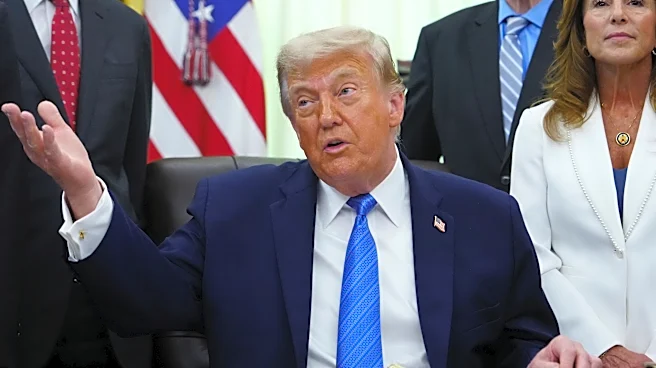
President Trump has claimed that the United States has been secretly extracting millions of barrels of oil from the Strait of Hormuz despite ongoing tensions with Iran. This assertion was made during a televised address from the Oval Office, where Trump stated
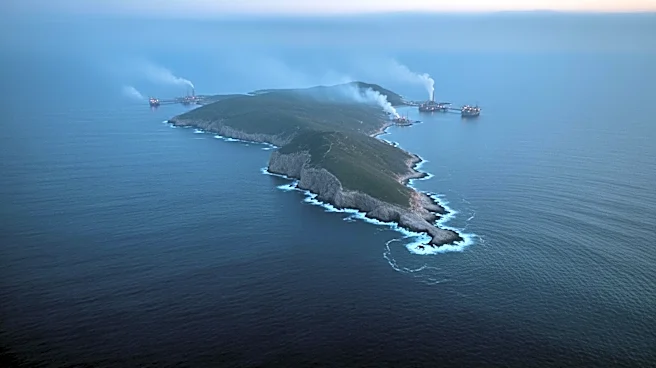
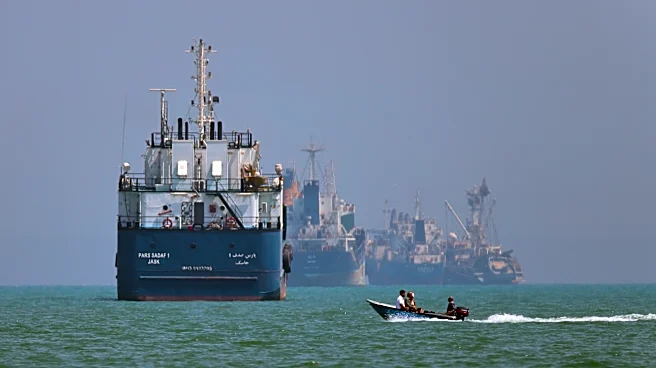
that the U.S. military facilitated the movement of oil tankers through the strait without Iran's knowledge. The Strait of Hormuz, a critical chokepoint for global oil supply, has been largely closed due to a naval blockade imposed by the U.S. and Israel following their conflict with Iran. Trump suggested that this clandestine operation has contributed to stabilizing oil prices, which have remained around $90 per barrel. However, there is skepticism about the feasibility of such a large-scale operation, as shipping data does not fully support the claim of 100 million barrels being moved.
Why It's Important?
The claim by President Trump, if true, could have significant implications for global oil markets and geopolitical dynamics. The Strait of Hormuz is a vital passage for about 20% of the world's oil supply, and any disruption can lead to substantial economic consequences. The ability of the U.S. to navigate this strategic waterway without Iranian interference could shift power dynamics in the region, potentially undermining Iran's control over the strait. Additionally, the assertion of U.S. control over the strait could escalate tensions with Iran and other regional players, affecting international relations and energy security. The skepticism surrounding the claim also highlights the challenges in verifying military operations in such a sensitive area.
What's Next?
The international community will likely seek clarification and evidence regarding President Trump's claims. If the U.S. has indeed managed to extract oil covertly, it may lead to diplomatic repercussions and calls for transparency. Iran, on the other hand, may respond with increased military presence or diplomatic protests to assert its control over the strait. The situation could also prompt discussions among global powers about the security and management of critical maritime chokepoints. Monitoring of shipping activities and military movements in the region is expected to intensify as stakeholders assess the validity and implications of the U.S. actions.