




What's Happening?
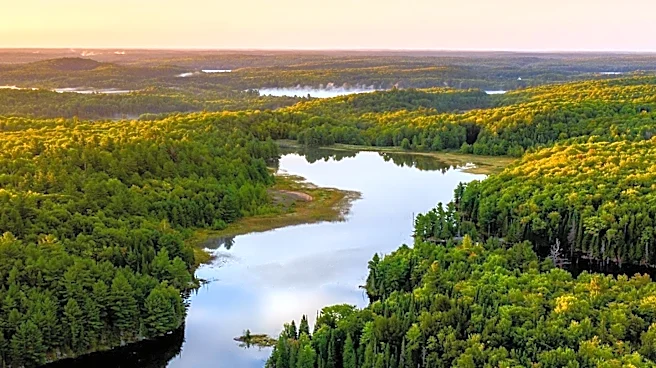
Minnesota Governor Tim Walz issued an executive order last month that prohibits all nonferrous mining within the Boundary Waters area. This directive specifically instructs the Department of Natural Resources and the Pollution Control Agency to cease
issuing leases and permits in the Rainy River Headwaters Watershed, which feeds into the Boundary Waters. The Governor's action follows a previous vote by Congress to overturn a 20-year ban on mining in the area, which would have allowed new copper and nickel mining proposals. Minnesota State Senate Minority Leader Mark Johnson has publicly criticized Governor Walz's executive order, accusing him of reneging on his word and predicting negative consequences for both Northern Minnesotans and the entire United States.
Why It's Important?
This executive order by Governor Walz has significant implications for environmental protection, economic development, and state-federal relations in Minnesota. The Boundary Waters Canoe Area Wilderness is a federally protected area, and the state's action to ban mining in its watershed reflects a strong commitment to preserving its ecological integrity. This move could set a precedent for other states facing similar environmental concerns regarding resource extraction near protected natural areas. Economically, the ban directly impacts the mining industry, particularly companies like Twin Metals, which have invested in exploring copper-nickel deposits in the region. State Senate Minority Leader Mark Johnson's opposition highlights the tension between environmental conservation and economic interests, particularly job creation and revenue generation from mining. His claim that the decision will harm 'all of America' suggests a broader national interest in securing critical minerals, which could lead to federal-state clashes over resource management and environmental regulations.
What's Next?
The executive order is expected to face continued political and potentially legal challenges. State Senate Minority Leader Mark Johnson's vocal opposition indicates that legislative efforts to counter or modify the ban may emerge. Mining companies, such as Twin Metals, which have existing interests in the region, are likely to explore all available avenues, including legal challenges, to protect their investments and pursue mining operations. The long-term enforceability of the executive order will depend on future political landscapes, as it can be altered once Governor Walz leaves office. Environmental advocacy groups will likely continue to push for permanent legislative protections for the Boundary Waters, while industry groups will lobby for policies that support mineral extraction. This ongoing conflict will likely keep the issue of mining in the Boundary Waters at the forefront of Minnesota's political discourse.
Beyond the Headlines
The controversy surrounding Governor Walz's executive order extends beyond immediate environmental and economic concerns, touching upon fundamental questions of state sovereignty versus federal authority, and the balance between resource exploitation and ecological preservation. The Boundary Waters, as a cherished natural wilderness, holds significant cultural and recreational value, making any threat to its environment a deeply emotional issue for many. The debate also highlights the broader national discussion about the transition to a green economy and the demand for critical minerals like copper and nickel, which are essential for technologies such as electric vehicles and renewable energy infrastructure. This creates a complex dilemma: how to meet the demand for these minerals while simultaneously protecting sensitive ecosystems. The outcome in Minnesota could influence how other states and the federal government approach similar conflicts, potentially shaping future environmental policies and resource management strategies across the U.S.