





What's Happening?
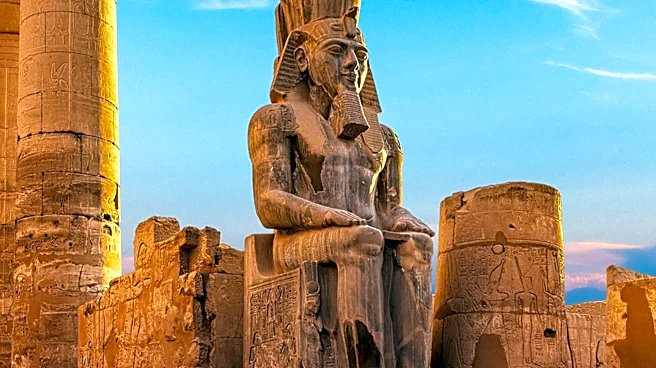
An Egyptian farmer, Khaled al-Shahat, discovered an unusual stone on his land in Behebat al-Hijara village, Gharbia Governorate, which led archaeologists to unearth fragments of two colossal royal statues believed to depict Pharaoh Ramses II. The initial
stone was identified as an ancient pink granite block bearing two of Ramses II's royal titles: 'King of Upper and Lower Egypt' and 'Son of Ra.' Subsequent excavations revealed a colossal head of a statue of Ramses II, measuring approximately 1.6 meters high, wearing the double crown symbolizing the unification of Upper and Lower Egypt. Experts estimate the full statue would have originally stood around 28 feet tall. Additionally, the main section of a second statue, nearly 8 feet long without its base and legs, was found, also believed to be Ramses II, depicted with a royal striped headdress. The Ministry of Tourism and Antiquities confirmed these findings, and work at the site is ongoing. The homeowner was honored with an Umrah pilgrimage for his responsible reporting of the discovery.
Why It's Important?
This discovery is significant for Egyptology and the understanding of ancient Egyptian history, particularly the reign of Ramses II, one of the most powerful and celebrated pharaohs. The unearthing of such large and well-preserved statues provides invaluable archaeological data, offering new insights into the artistic, religious, and political landscape of the New Kingdom period. The scale of the statues underscores the grandeur and authority associated with Ramses II, who ruled from 1279 B.C. to 1213 B.C. The find also highlights the importance of citizen involvement in archaeological preservation, as the farmer's prompt reporting enabled the professional excavation and protection of these artifacts. This type of discovery can attract further tourism and research interest to Egypt, contributing to the nation's cultural heritage and economy.
What's Next?
Archaeological excavations and studies are continuing on Khaled al-Shahat's land to uncover more about the statues, the history of the area, and its architectural development in ancient Egypt. Researchers will likely focus on piecing together the fragments, conducting detailed analyses of the materials and inscriptions, and exploring the surrounding area for additional artifacts or structures. The findings could lead to a re-evaluation of historical records or provide new perspectives on the extent of Ramses II's influence and the cultural practices of his era. The Ministry of Tourism and Antiquities will likely oversee the conservation and potential display of these statues, which could become major attractions in Egyptian museums, such as the Grand Egyptian Museum. Further research may also involve comparing these statues with other known depictions of Ramses II to understand stylistic variations or regional differences.
Beyond the Headlines
The discovery transcends mere archaeological interest, touching upon themes of cultural heritage, national identity, and the ethical responsibilities of individuals in preserving historical artifacts. The recognition and reward given to the farmer, Khaled al-Shahat, for his honesty and responsible conduct, sets a precedent and encourages public participation in safeguarding historical sites. This incident underscores the often-unseen role of local communities in archaeological discoveries and the potential for ordinary citizens to contribute significantly to scientific and historical knowledge. Furthermore, the ongoing work at the site could reveal more about the daily lives and societal structures of ancient Egyptians, beyond just the royal figures, offering a more holistic view of the past. The preservation of such monumental works also raises questions about the long-term challenges of protecting ancient sites from environmental factors and illicit trafficking.