



What's Happening?
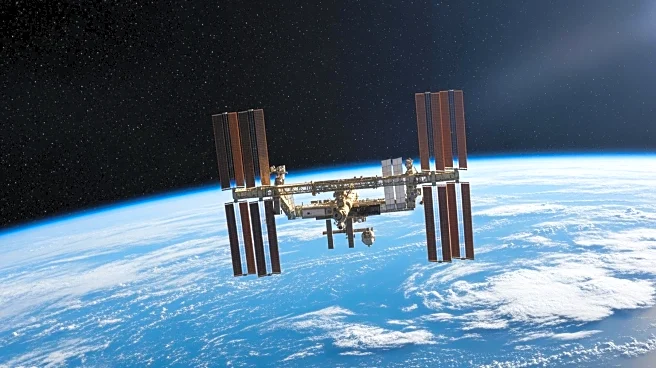
NASA's International Space Station (ISS) Program Manager Dana Weigel and Director of the International Space Station and Commercial Spaceflight Divisions Robyn Gatens discussed the achievements and future of the ISS in a podcast episode. They highlighted
the station's role in international collaboration and scientific research over the past 25 years. The ISS has been a platform for continuous human habitation since November 2, 2000, serving as a laboratory and proving ground for future space exploration missions, including the Artemis program aimed at returning humans to the Moon and eventually reaching Mars.
Why It's Important?
The ISS represents a significant achievement in international cooperation and scientific advancement. It has facilitated research that has led to medical breakthroughs and technological innovations. The station's continuous operation has provided valuable insights into long-term human habitation in space, which is crucial for future missions to the Moon and Mars. The partnerships and technologies developed through the ISS program are expected to play a critical role in the success of NASA's Artemis program and other future space exploration endeavors.
What's Next?
NASA plans to continue leveraging the ISS as a testbed for technologies and strategies that will be essential for deep space exploration. The agency is also working on transitioning to commercially operated space stations in low Earth orbit, which will allow NASA to focus resources on missions beyond Earth's orbit. The ISS will continue to support international and commercial partnerships, fostering innovation and expanding human presence in space.