



What's Happening?
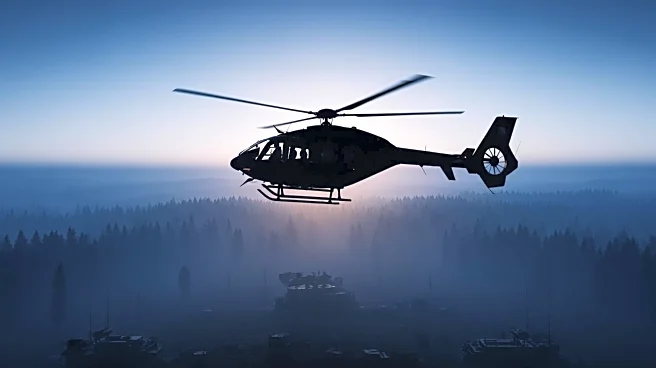
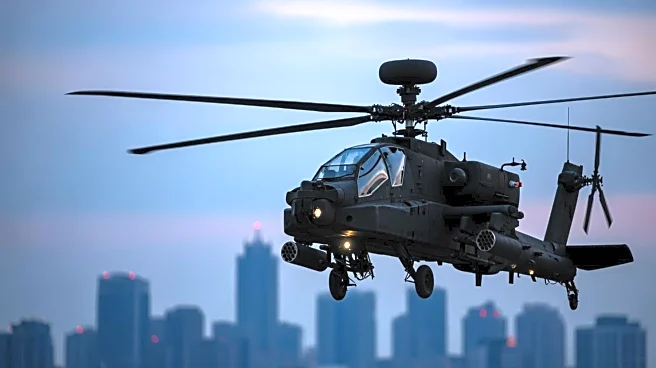
The U.S. Army is conducting an investigation into why two military AH-64 Apache helicopters flew unusually close to musician Kid Rock's residence in the Nashville area. This incident gained attention after Kid Rock, whose real name is Robert James Ritchie,
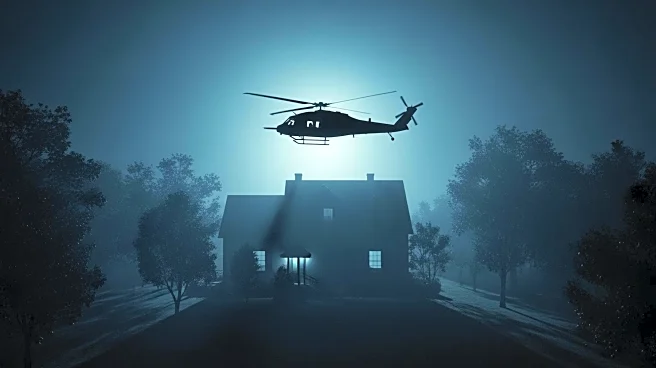
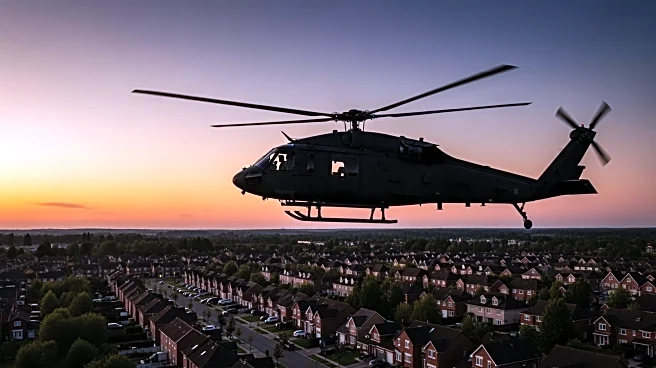
used the event to mock California Governor Gavin Newsom on social media. The helicopters, based at Fort Campbell, were initially observed flying over a 'No Kings' protest in downtown Nashville before maneuvering at low altitude near Kid Rock's property. The Army is examining whether these maneuvers adhered to aviation safety rules and standard operating procedures. According to Military.com, such flights are typically part of routine training missions, and there is no evidence suggesting they were conducted at the request of any private individual.
Why It's Important?
This incident highlights the scrutiny over the use of military resources and the potential implications of their deployment in civilian areas. The investigation underscores the importance of maintaining strict aviation safety standards and the accountability of military operations. The event also reflects the ongoing social media-driven feud between Kid Rock, a known conservative figure, and Governor Newsom, who represents liberal policies. This public exchange may influence public perception of military operations and the use of taxpayer-funded resources, raising questions about the appropriateness of such maneuvers near private residences.
What's Next?
The Army's investigation will determine whether the helicopter maneuvers complied with established flight regulations. Depending on the findings, there could be implications for military training protocols and community relations. The outcome may also affect how military operations are perceived by the public, particularly in terms of resource allocation and safety. Additionally, the ongoing feud between Kid Rock and Governor Newsom may continue to play out on social media, potentially influencing public discourse around political and cultural issues.