
What's Happening?
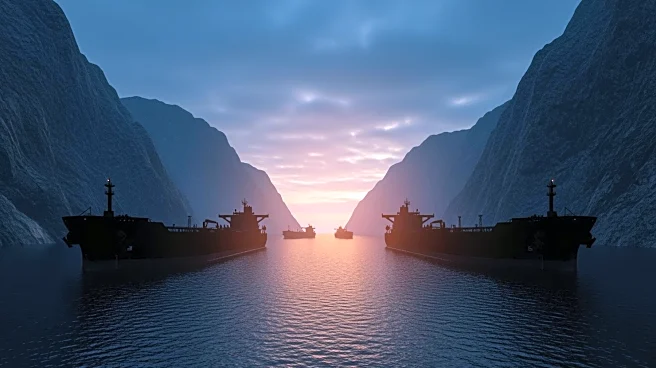
Oil supertanker rates in the Middle East have reached record highs as the conflict between the U.S. and Iran disrupts shipping through the Strait of Hormuz. The benchmark freight rate for Very Large Crude Carriers (VLCCs) has surged to $423,736 per day,
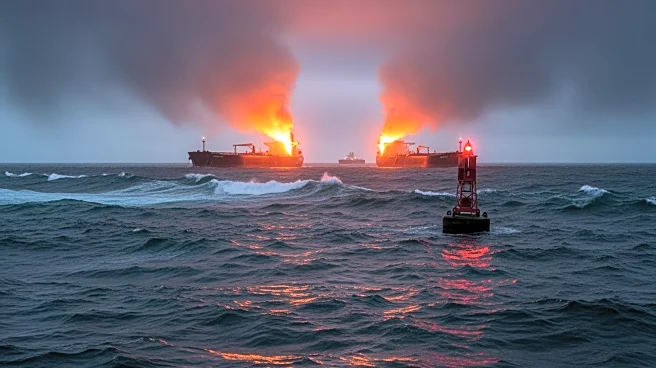
marking a significant increase from previous levels. This rise follows U.S. and Israeli military actions against Iran, which have led to heightened security concerns and the effective halt of shipping traffic through the Strait. Iran has declared the Strait closed and threatened to attack any vessel attempting to pass, although this claim has been contested by the U.S. military.
Why It's Important?
The Strait of Hormuz is a critical artery for global oil supply, and its closure could have severe implications for international energy markets. The spike in shipping costs reflects the increased risk and uncertainty in the region, which could lead to higher energy prices globally. The situation underscores the strategic importance of the Strait and the potential for regional conflicts to disrupt global trade and energy supply chains. The withdrawal of war risk insurance by major providers further complicates the situation, as it increases the financial risk for shipping companies operating in the area.
What's Next?
The ongoing conflict and the closure of the Strait of Hormuz are likely to prompt international diplomatic efforts to de-escalate tensions and restore safe passage for shipping. Countries reliant on oil from the Middle East may need to seek alternative sources or routes to ensure energy security. The situation may also lead to increased investment in maritime security and the exploration of alternative energy sources to reduce dependency on vulnerable supply routes.