






What's Happening?
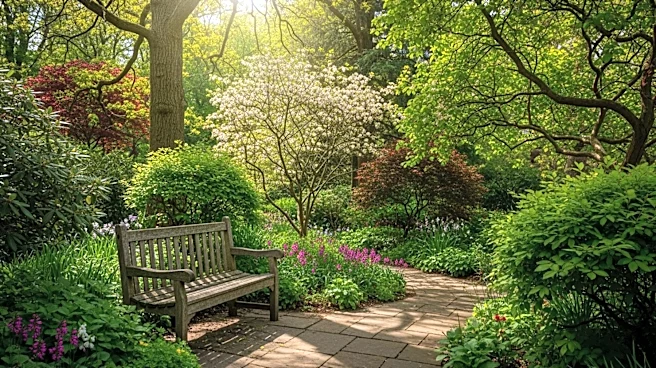
Iraq war veteran John Follmer, who advises Los Angeles County on military and veterans affairs, is leading a group of veterans in rehabilitating a neglected Japanese garden on the West LA Veterans Affairs Campus. The garden, originally built in 1968,
had fallen into disrepair until Follmer began its restoration six years ago. Every Thursday, veterans volunteer to work in the garden, which features koi ponds and Japanese maple trees. The garden serves as a peaceful retreat for veterans, offering a space for meditation and community building. Despite the garden's progress, the VA campus faces challenges, including delayed construction of veteran housing and a lack of amenities like supermarkets and coffee shops. The Trump administration's mixed messages on funding have added to the uncertainty, with promises of development yet to be fully realized.
Why It's Important?
The restoration of the garden is significant as it provides a therapeutic environment for veterans, many of whom are homeless or recovering from addiction. The project highlights the need for community spaces that support veterans' mental health and well-being. The garden's transformation also underscores the broader issues facing the VA campus, such as inadequate housing and amenities for veterans. The lack of progress in these areas reflects ongoing challenges in fulfilling government promises to veterans. The garden's success demonstrates the potential for community-driven initiatives to address these gaps, offering a model for other veteran support programs.
What's Next?
The future of the West LA VA Campus depends on continued efforts to develop housing and community resources for veterans. Follmer envisions the campus as a permanent community for veterans, with plans for preferential housing and recreational activities. However, achieving this vision requires overcoming bureaucratic hurdles and securing funding. The Trump administration's budget decisions and the requirement for NDAs have drawn criticism, highlighting the need for transparency and accountability in the campus's development. As construction progresses, stakeholders will need to advocate for the resources and infrastructure necessary to support veterans effectively.
Beyond the Headlines
The garden's restoration raises broader questions about the role of public spaces in veteran rehabilitation and community integration. It highlights the potential for nature-based therapies to aid in recovery and the importance of creating inclusive environments that foster a sense of belonging. The project also reflects a shift towards grassroots initiatives in addressing veteran needs, emphasizing the power of community engagement and volunteerism. As the garden continues to evolve, it may inspire similar projects across the country, contributing to a larger movement towards holistic veteran care.