



What's Happening?
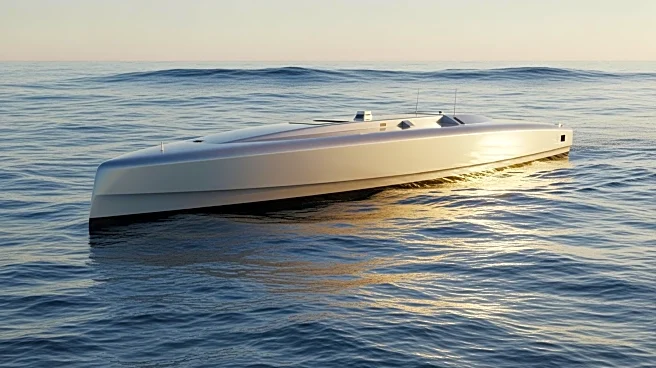
Seasats, a San Diego-based company specializing in autonomous surface vehicles, has completed an eight-day sea trial of its Quickfish unmanned surface vessel (USV). The Quickfish is designed for high-speed interception and long-endurance missions, capable
of speeds over 35 knots and extended operational periods. This trial marks a significant advancement in autonomous maritime operations, addressing the endurance limitations of traditional USVs. The vessel features a dedicated payload bay for deploying unmanned aerial vehicles and combines low-speed electric propulsion with a high-speed jet drive. This development is part of Seasats' efforts to enhance the role of USVs in modern naval operations, supported by significant U.S. defense contracts.
Why It's Important?
The successful trial of the Quickfish USV represents a major step forward in the use of autonomous systems for maritime defense. With growing demand for long-endurance USVs, this technology could revolutionize naval operations by providing persistent surveillance, port security, and coastal defense capabilities. The ability to pre-position these vessels strategically enhances their utility in both offensive and defensive roles. As the U.S. and its allies seek to expand the use of autonomous systems, platforms like Quickfish will be critical in meeting the evolving demands of modern warfare and maritime security.
What's Next?
Following the successful trial, Seasats is likely to continue refining the Quickfish platform, potentially leading to broader deployment in U.S. naval operations. The company may also explore additional defense contracts and collaborations with international partners. As the role of USVs expands, regulatory and operational frameworks will need to adapt to accommodate these advanced technologies, ensuring their effective integration into existing naval strategies.