








What's Happening?
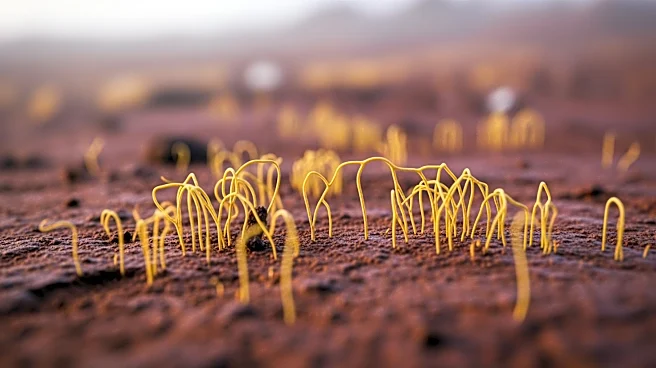
Researchers from the University of Bremen and the German Aerospace Center have identified specific fungal species that could potentially convert Martian regolith into fertile soil suitable for agriculture. The study, published in the journal Frontiers
in Astronomy and Space Sciences, highlights the potential of fungi like trichoderma to metabolize toxic elements in Martian soil while producing essential nutrients such as phosphates. This discovery could significantly reduce the need to transport soil or other growth media from Earth, thereby lowering the costs of establishing a permanent human presence on Mars. The research also points to the use of extreme fungi, such as Cryomyces antarcticus, which can survive harsh space conditions and promote plant growth under environmental stress.
Why It's Important?
The ability to transform Martian soil into a medium capable of supporting plant life is crucial for future Mars colonization efforts. By utilizing local resources, such as Martian regolith, and converting them into fertile soil, the logistical and financial challenges of transporting large quantities of soil from Earth can be mitigated. This advancement not only supports the sustainability of long-term human missions to Mars but also opens up possibilities for self-sufficient agricultural systems on the planet. The research underscores the importance of innovative solutions in space exploration, potentially paving the way for more cost-effective and sustainable extraterrestrial agriculture.
What's Next?
Further research is needed to validate the safety and effectiveness of using Martian regolith for agriculture. Key questions remain about the safety of consuming crops grown in this medium and their resilience to radiation exposure. Future studies will likely focus on these aspects, as well as the practical implementation of fungal-based soil conversion techniques on Mars. The findings could also prompt interest from space agencies and private companies involved in Mars exploration, potentially influencing future mission planning and resource allocation.
Beyond the Headlines
The use of fungi to convert Martian soil into fertile ground highlights the broader potential of biotechnology in space exploration. This approach not only addresses the immediate challenges of growing food on Mars but also suggests a paradigm shift in how we approach resource utilization in space. The ethical and environmental implications of such technologies could extend beyond Mars, influencing sustainable practices on Earth and other celestial bodies. As space exploration continues to advance, the integration of biological solutions may become a cornerstone of extraterrestrial colonization strategies.