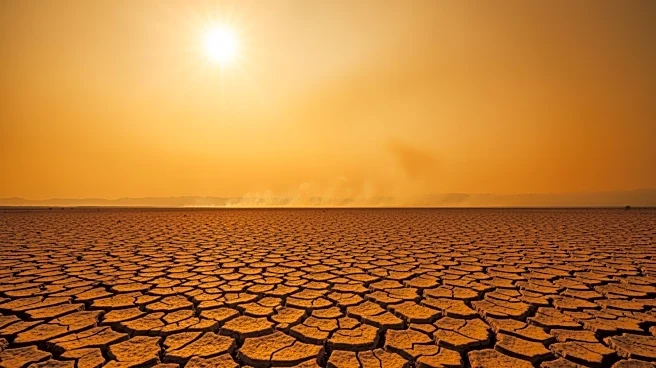




What's Happening?
An early and intense heatwave is affecting much of the western United States, particularly California and the Southwest, with temperatures expected to soar above 90 degrees Fahrenheit and reach triple digits in parts of Arizona and Nevada. The National
Weather Service has issued heat advisories and warnings, noting the 'anomalously early' heat wave caused by a high-pressure dome. This heatwave is exacerbating the region's snow drought, depleting the already below-average snowpack and raising concerns about wildfire risk and water availability later in the year. Southern California is bracing for dangerously hot conditions, with temperatures potentially reaching 104 degrees, prompting extreme heat warnings and urging residents to stay hydrated and avoid outdoor activities during peak heat hours.
Why It's Important?
The early onset of such high temperatures is significant as it highlights the increasing frequency and intensity of heatwaves, which are often linked to climate change. This heatwave poses a direct threat to public health, particularly for vulnerable populations such as the elderly and those without access to air conditioning. Additionally, the depletion of snowpack due to the heatwave could lead to severe water shortages and increase the risk of wildfires, which have already been a persistent issue in the region. The economic impact could be substantial, affecting agriculture, water supply, and increasing the costs associated with firefighting and emergency services.
What's Next?
As the heatwave continues, it is expected to expand and intensify, potentially breaking all-time monthly temperature records in several cities. Authorities are likely to continue issuing heat advisories and may implement additional measures to mitigate the impact on public health and safety. The ongoing situation could prompt further discussions and actions regarding climate change policies and emergency preparedness strategies to better handle such extreme weather events in the future.