


What's Happening?
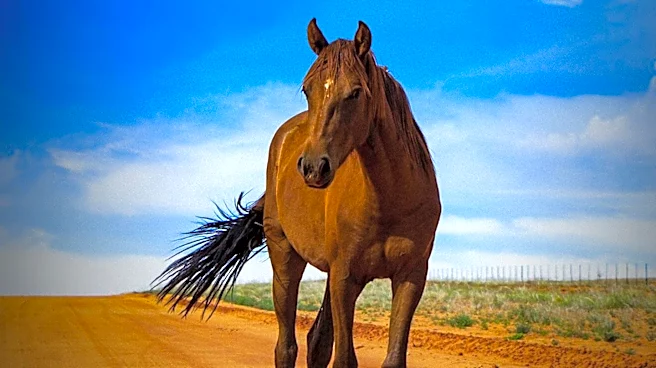
The Michigan Department of Agriculture and Rural Development (MDARD) has reported the first animal case of Eastern equine encephalitis (EEE) in Michigan this year, involving a 1-year-old horse in Clare County that was euthanized due to the illness. This
follows a human case of EEE diagnosed in Roscommon County earlier in August. EEE is a rare but often lethal virus transmitted to both horses and humans through infected mosquito bites. State Veterinarian Dr. Nora Wineland emphasized that these detections confirm the circulation of EEE and other potential mosquito-borne viruses within Michigan's mosquito population. The affected Quarter Horse colt was not fully vaccinated against EEE. The Michigan Department of Health and Human Services (MDHHS) notes that EEE causes serious illness and has a fatality rate of 1 in 3 among infected individuals, with survivors often experiencing permanent brain damage.
Why It's Important?
The detection of EEE in both an animal and a human in Michigan signals a significant public health concern for the state. EEE is one of the most dangerous mosquito-borne diseases in the U.S., with severe neurological consequences for those who contract it and a high mortality rate. The presence of the virus in the mosquito population means that residents, particularly those in affected areas, are at an elevated risk. This situation places a burden on public health resources, requiring increased surveillance, public education, and mosquito control efforts. For the agricultural sector, particularly horse owners, the EEE detection highlights the critical importance of vaccination and protective measures for livestock. The lack of a human vaccine or specific treatment for EEE underscores the necessity of preventive actions to avoid mosquito bites.
What's Next?
Michigan health leaders are urging residents to take immediate precautions against mosquito bites, including using EPA-registered insect repellent, limiting outdoor activities during peak mosquito hours (dawn and dusk), and wearing protective clothing. MDARD is advising horse owners to consult veterinarians about EEE vaccinations and to eliminate standing water where mosquitoes breed. Public health officials will likely continue to monitor mosquito populations and disease activity, potentially issuing further advisories or implementing targeted mosquito control measures in affected regions. The state may also increase funding or support for arbovirus testing in animals to better track the spread of the disease. Educational campaigns will be crucial to inform the public about the risks and preventive strategies to minimize exposure to infected mosquitoes.
Beyond the Headlines
The re-emergence and confirmed cases of EEE in Michigan underscore the ongoing challenge of managing zoonotic diseases, where pathogens can jump between animals and humans. This situation highlights the interconnectedness of environmental health, animal health, and human health, often referred to as the 'One Health' approach. The incident also brings to light the broader implications of climate patterns on disease vectors, as changing environmental conditions can influence mosquito habitats and breeding cycles. Beyond the immediate health crisis, there's a need for sustained investment in public health infrastructure, veterinary medicine, and environmental monitoring to anticipate and respond to such threats. The case also serves as a reminder of the importance of individual responsibility in disease prevention, particularly in areas where environmental factors contribute to increased risk.