
What's Happening?
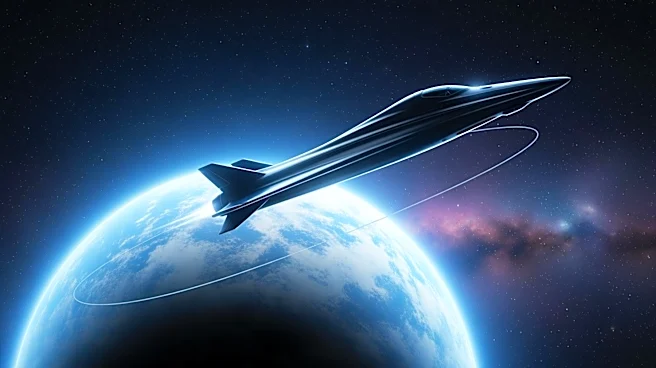
Elon Musk's SpaceX and Jeff Bezos' Blue Origin are intensifying their efforts to develop lunar landers for NASA's Artemis missions, aiming to land humans on the Moon by the end of the decade. Both companies
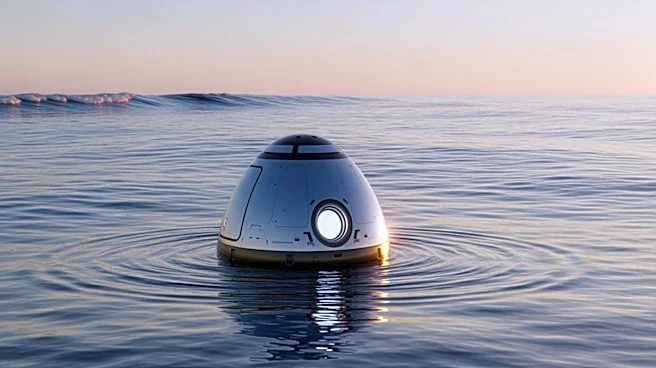
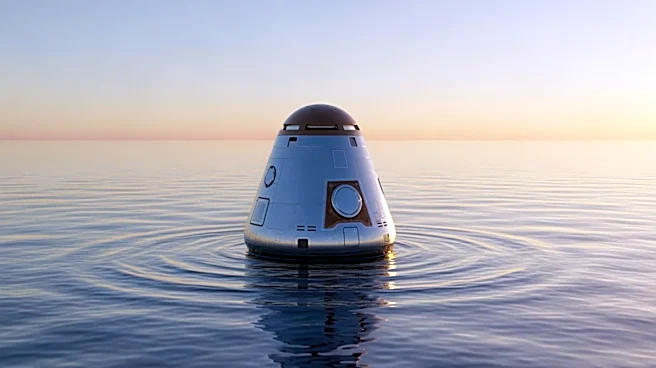
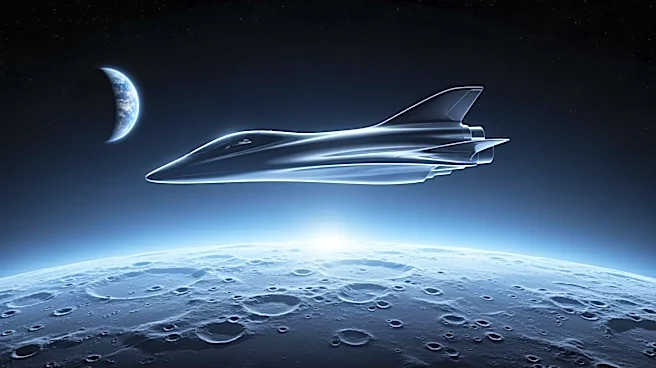
have been awarded multi-billion-dollar contracts to create reusable landers, with SpaceX working on its Human Landing System and Blue Origin developing the Blue Moon lander. The Artemis III mission, scheduled for mid-2027, will test these landers' docking capabilities with NASA's Orion capsule in low Earth orbit. This mission is a precursor to the planned lunar landings in 2028, where the Orion capsule and moon lander will dock in lunar orbit before astronauts descend to the Moon's surface. NASA's broader goal is to establish a permanent human presence on the Moon's south pole, which will serve as a proving ground for future crewed Mars missions.
Why It's Important?
The competition between SpaceX and Blue Origin is crucial for maintaining U.S. leadership in space exploration. Successfully developing and deploying these lunar landers will not only enable the U.S. to return humans to the Moon but also potentially outpace China's lunar ambitions, which aim for a manned landing by 2030. Establishing a permanent lunar base will enhance scientific research and technological advancements, providing a strategic advantage in space. Additionally, the development of space-based AI infrastructure by these companies could revolutionize data processing and energy efficiency, as space data centers would harness solar energy and operate free from Earth-bound regulations.
What's Next?
The next steps involve the successful testing of the lunar landers during the Artemis III mission. If successful, this will pave the way for the Artemis lunar landings in 2028 and the establishment of a permanent lunar base. Both SpaceX and Blue Origin are also exploring the feasibility of space-based AI data centers, which could transform AI infrastructure by leveraging space's unique advantages. The outcome of these developments will significantly impact the future of space exploration and AI technology.