





What's Happening?
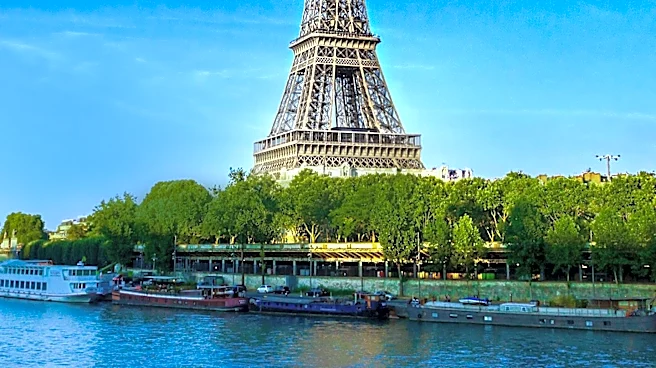
Paris has opened three supervised swimming areas in the Seine River for the second consecutive summer. These sites, located near City Hall, the Eiffel Tower, and in eastern Paris, are free to the public and will remain open throughout the summer, contingent
on water quality and weather conditions. The initiative is part of a broader effort to make the Seine a recreational space, following significant investments in cleaning up the river. The sites are monitored by lifeguards, and daily water quality tests are conducted to ensure safety. The move has been well-received by both tourists and locals, who enjoy the unique experience of swimming in the heart of Paris. The initiative also aligns with preparations for the Paris 2024 Olympics, which included events in the Seine, prompting a multibillion-euro cleanup effort.
Why It's Important?
The reopening of swimming areas in the Seine represents a significant shift in urban recreational opportunities in Paris, enhancing the city's appeal as a tourist destination. This initiative not only provides a unique experience for visitors but also reflects the success of environmental efforts to improve water quality in the Seine. The project underscores the importance of sustainable urban planning and the potential for cities to reclaim natural spaces for public use. The initiative could serve as a model for other cities looking to enhance urban livability and environmental health. Additionally, the project highlights the impact of major international events, like the Olympics, in driving infrastructure improvements and environmental initiatives.
What's Next?
As the summer progresses, Parisian authorities will continue to monitor the water quality and manage the capacity of the swimming sites to ensure safety and accessibility. The success of this initiative could lead to the expansion of similar projects in other parts of the city or in other urban areas globally. The ongoing maintenance and improvement of the Seine's water quality will remain a priority, especially with the upcoming Paris 2024 Olympics. The city may also explore additional recreational uses for the river, further integrating it into the urban landscape and enhancing its role as a public space.