






What's Happening?
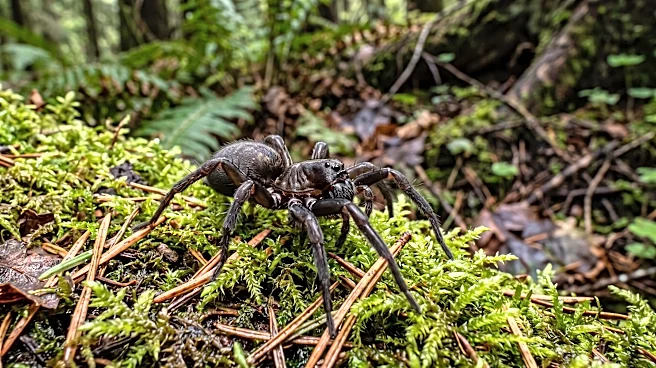
Researchers from the University of Idaho have discovered a previously unknown species of spider in the state, which they have named Hexura vandal, in tribute to the university. The discovery occurred during a survey of mountainous forests near Kooskia
in 2024, where scientists initially focused on the Microhexura genus. Postdoctoral researcher Ethan J. Briggs and doctoral student Arnau Calatayud-Mascarell identified the distinct nickel-sized spider, which appears to be confined to moist, coniferous forests in north-central Idaho. The research team's findings have since been published, confirming the spider as a unique species of Hexura.
Why It's Important?
The discovery of Hexura vandal is significant for several reasons. Scientifically, it adds to the known biodiversity of Idaho and the broader understanding of arachnid species, potentially revealing new insights into evolutionary biology and ecological systems. For the University of Idaho, it highlights the caliber of its research programs and the contributions its scientists make to the field of entomology. Environmentally, the spider's confinement to a specific habitat suggests it could be an indicator species for unique, remnant ecosystems in Idaho, emphasizing the importance of conservation efforts for these particular environments. This discovery also brings attention to the rich, unexplored natural heritage within the state.
What's Next?
Following the publication of their findings, the University of Idaho research team will likely continue to study Hexura vandal to understand its life cycle, behavior, and ecological role more thoroughly. There will be efforts to map its exact distribution and assess its conservation status, especially given its restricted habitat. The lead researcher, Chris Hamilton, hopes the spider will be designated Idaho's state spider, which could further elevate its profile and draw attention to the need for habitat protection. This discovery may also inspire further biodiversity surveys in Idaho's unique ecosystems, potentially leading to more new species discoveries.
Beyond the Headlines
The discovery of Hexura vandal transcends a simple scientific finding; it underscores the vast amount of undiscovered life on Earth and the continuous need for ecological exploration and preservation. It raises ethical questions about human impact on natural habitats and the responsibility to protect unique species before they are lost. Culturally, naming the spider after the university fosters a sense of local pride and connection to the natural world. This event also serves as a reminder that even in well-studied regions, significant biological discoveries are still possible, reinforcing the value of scientific research and its potential to inform conservation policies and public awareness.