
What's Happening?
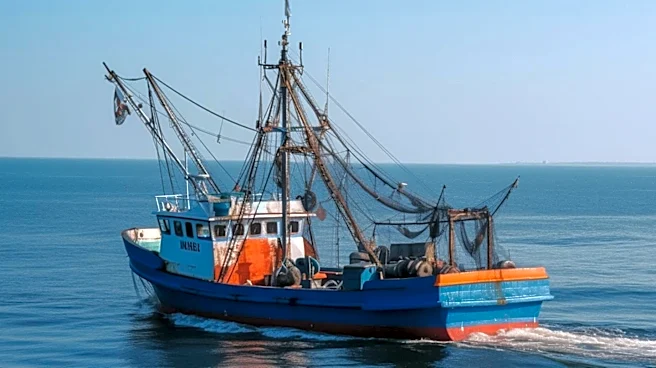
Bottom trawling, an ancient fishing method that involves dragging weighted nets along the seafloor, is causing extensive physical and ecological damage to marine environments. According to the National
Aeronautics and Space Administration (NASA), this practice crushes and destroys seafloor habitats, scrapes mud off the ocean bottom, and smothers surviving bottom-dwelling creatures. It accounts for approximately a quarter of the world's seafood harvest and 90% of habitat disturbance caused by commercial fishing. A global inventory published in March revealed that some 3,000 fish species have been caught in bottom trawls, with 14.3% of these species classified as threatened or near threatened with extinction. This includes critically endangered species like the giant guitarfish and endangered zebra sharks. Additionally, bottom trawling releases an estimated 375 million to 408 million tons of carbon dioxide annually.
Why It's Important?
The widespread destruction caused by bottom trawling has severe implications for marine biodiversity and ecosystem health, impacting the U.S. and global oceans. The obliteration of seafloor habitats, including fragile ecosystems like coral reefs and sponge fields, removes essential breeding grounds, nurseries, and food sources for countless marine species. This loss of habitat directly contributes to the decline of fish populations, including commercially valuable species, threatening the livelihoods of fishing communities and the sustainability of the seafood industry. The high rate of by-catch, where non-target marine life such as rays, sea turtles, and sharks are caught and discarded, further exacerbates the biodiversity crisis. For the U.S., where about half of the seafloor in federal waters is now off-limits to bottom trawling, the issue highlights the ongoing tension between economic fishing practices and environmental conservation, with significant long-term consequences for ocean health and resource availability.
What's Next?
Addressing the destructive impacts of bottom trawling requires a multi-faceted approach. Project Seahorse notes that since nearly 99% of bottom trawling occurs within national waters, governments have the authority and responsibility to manage its effects. This could involve expanding marine protected areas, implementing stricter regulations on fishing gear, and promoting alternative, more sustainable fishing methods. Research into less damaging trawling technologies or a shift towards aquaculture practices that minimize environmental footprint could also be explored. Public awareness campaigns about the environmental cost of certain seafood choices might influence consumer demand, encouraging the industry to adopt more responsible practices. The ongoing challenge will be to balance the economic viability of fishing industries with the urgent need to protect and restore marine ecosystems.
Beyond the Headlines
The issue of bottom trawling extends beyond immediate ecological damage to encompass broader ethical and historical dimensions. The practice, dating back to the 1300s, has been recognized as destructive for centuries, yet it persists due to its economic efficiency in harvesting large quantities of seafood. This highlights a persistent human challenge: balancing short-term economic gains with long-term environmental sustainability. The release of significant amounts of carbon dioxide from disturbed seafloor sediments also links bottom trawling to climate change, adding another layer of environmental concern. The comparison to the impact of offshore wind farms, often criticized for industrializing the ocean, suggests a need for a more holistic assessment of human activities in marine environments, ensuring that all industries are held to high environmental standards. The 'trash fish' phenomenon, where smaller, unrecorded species are discarded, also points to a lack of comprehensive data and transparency in commercial fishing, obscuring the true extent of biodiversity loss.