






What's Happening?
European Central Bank (ECB) President Christine Lagarde reportedly intervened to prevent Binance from obtaining a pan-European crypto license through Greece. According to a Wall Street Journal account, Lagarde personally pressed Greek leaders to halt
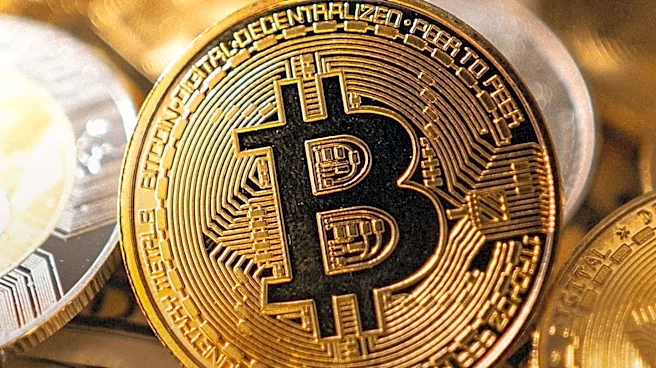
Binance's application for authorization as a crypto-asset service provider under the European Union’s Markets in Crypto-Assets (MiCA) framework. Binance had sought this license through Greece’s Hellenic Capital Market Commission (HCMC), which would have allowed it to 'passport' its operations across the entire EU bloc. By late May, Greek officials had indicated the application was nearing approval, with Binance's CEO, Richard Teng, planning a trip to Athens. However, in early June, a senior Greek official informed Binance that Lagarde had asked Prime Minister Kyriakos Mitsotakis not to grant the license. The HCMC subsequently stated it could not proceed without the prime minister's backing, leading Binance to withdraw its Greek filing on June 24, just days before the July 1 deadline for existing crypto firms to hold a license or cease EU operations.
Why It's Important?
This incident highlights the significant influence of informal political pressure on regulatory processes, even in areas legally designated for national authorities. Lagarde's reported objections were twofold: Binance's 2023 U.S. guilty plea for Bank Secrecy Act, money-transmission, and sanctions violations, which resulted in a $4.3 billion settlement, and concerns that the world's largest exchange would accelerate the use of dollar-backed stablecoins in Europe. The ECB views the proliferation of dollar stablecoins as a potential threat to its digital euro project and euro-denominated alternatives, as Lagarde has publicly stated that dollar stablecoins already dominate a market exceeding $300 billion. This intervention underscores the ECB's commitment to safeguarding the euro's role in the digital economy and its apprehension about the potential for dollar-backed digital assets to undermine its monetary sovereignty. The episode also leaves Binance without the EU-wide passport it nearly secured, while licensed competitors continue to operate, raising questions about fair competition and regulatory consistency.
What's Next?
Binance has stated its intention to pursue authorization in another EU country, which will test whether similar political and policy concerns persist in other member states. The incident also brings into focus the informal mechanisms of influence within the EU's regulatory landscape, where national licensing decisions can be swayed by broader European policy objectives. The ECB's stance on dollar-backed stablecoins suggests continued scrutiny and potential regulatory hurdles for crypto firms operating with such assets in the EU. Future applications by Binance or similar entities will likely face intense examination regarding their compliance history and their potential impact on the digital euro initiative. This situation could also prompt a re-evaluation of the balance between national regulatory autonomy and supranational policy objectives within the EU's financial sector, particularly concerning emerging technologies like cryptocurrencies.
Beyond the Headlines
The reported intervention by ECB President Lagarde reveals a deeper geopolitical and economic struggle over digital currency dominance. The concern about dollar-backed stablecoins undermining the digital euro project is not merely about market share but about maintaining monetary policy control and financial stability within the Eurozone. The U.S. dollar's global reserve currency status is a significant factor, and the rise of dollar-pegged digital assets could extend its influence into new digital realms, potentially challenging the euro's standing. This situation also highlights the tension between innovation in the crypto space and the desire of central banks to control the evolution of digital money. The episode could accelerate efforts by the ECB and other central banks to develop their own central bank digital currencies (CBDCs) to counter the perceived threat from private stablecoins, particularly those denominated in foreign currencies. It also underscores the complex interplay of national sovereignty, international finance, and technological advancement in shaping the future of money.