
What's Happening?
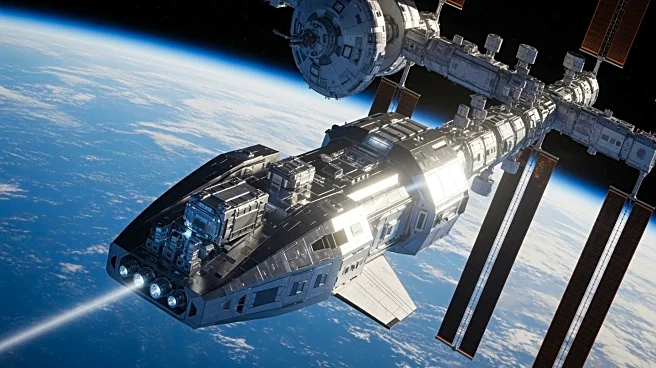
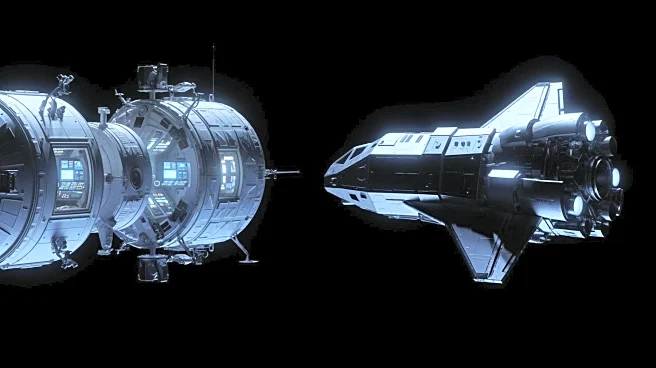
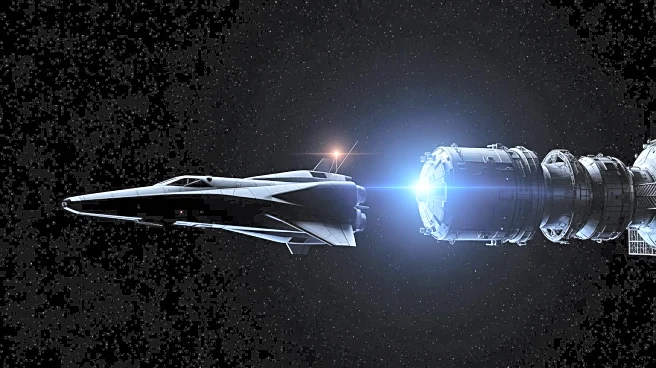
A Russian cargo spacecraft, Progress 94, encountered a technical issue after its launch from Kazakhstan, as two automated rendezvous antennas failed to deploy. This malfunction could impede its planned self-guided docking with the International Space
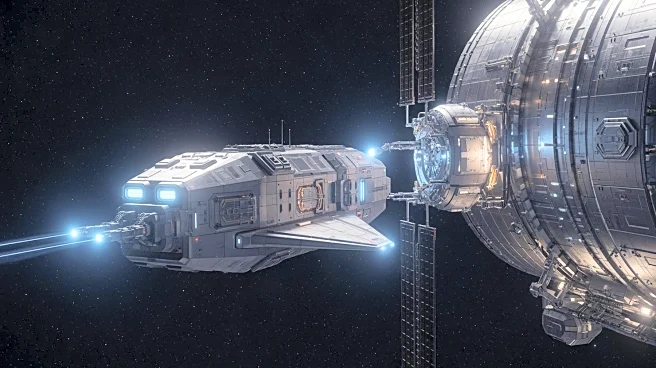
Station (ISS). The spacecraft, carrying approximately 3 tons of supplies, is scheduled to dock with the ISS. Roscosmos, Russia's space agency, is attempting to resolve the antenna issue during the flight. If unsuccessful, cosmonaut Sergey Kud-Sverchkov will manually guide the spacecraft using a backup system. Despite the antenna problem, all other systems on Progress 94 are functioning normally, and the spacecraft is on track for its scheduled docking.
Why It's Important?
The successful docking of Progress 94 is crucial for maintaining the supply chain to the ISS, which relies on regular deliveries of food, fuel, and other essentials. Any delay or failure in docking could disrupt the operations and experiments conducted on the ISS. This incident highlights the challenges and risks associated with space missions, particularly those involving automated systems. The situation also underscores the importance of international collaboration in space exploration, as NASA and Roscosmos work together to address the issue. The outcome of this mission could influence future protocols and contingency plans for space missions.
What's Next?
If Roscosmos cannot resolve the antenna issue in-flight, the manual docking procedure will be a critical test of the backup systems and the skills of the ISS crew. The spacecraft is expected to remain docked for about six months, after which it will be filled with waste and sent to burn up in Earth's atmosphere. The incident may prompt a review of the design and reliability of the automated systems used in space missions, potentially leading to improvements in future spacecraft.