







What's Happening?
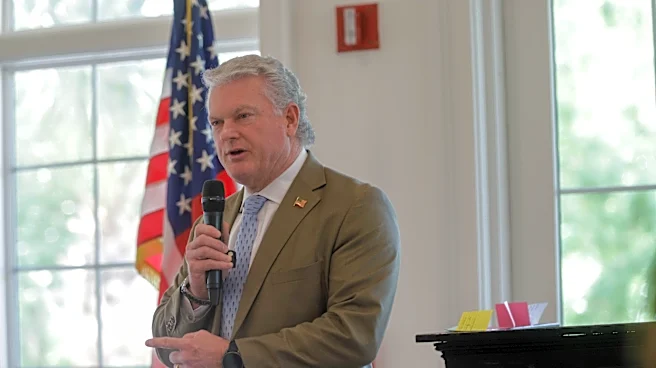
The Israel-Georgia Business Chamber recently marked its 30th anniversary with a focus on expanding public diplomacy efforts globally. Itsik Moshe, head of the chamber, proposed establishing 100 public-diplomacy offices worldwide to combat antisemitism
and strengthen Israeli ties. The initiative aims to leverage the successful Israel-Georgia relationship as a model for international cooperation in business, tourism, and culture. Moshe emphasized the importance of working with non-Jewish student leaders and local communities to foster understanding and support for Israel. The event highlighted the chamber's achievements in promoting bilateral relations and cultural exchanges, with plans for further investments and collaborations in various sectors.
Why It's Important?
The proposed network of public-diplomacy offices represents a strategic effort to enhance Israel's global image and counter antisemitism through grassroots engagement. By focusing on local partnerships and student leadership, the initiative seeks to build a broad base of support for Israel beyond traditional diplomatic channels. This approach could lead to increased economic and cultural exchanges, benefiting both Israel and its partner countries. The emphasis on combating antisemitism through education and legal measures underscores the need for a coordinated international response to prejudice and discrimination. The chamber's activities also highlight the potential for business and cultural ties to serve as effective tools for diplomacy.
What's Next?
The next steps involve securing public backing and partnerships to establish the proposed public-diplomacy offices. The initiative will require collaboration with Israeli government bodies, educational institutions, and international partners to implement its programs effectively. The chamber plans to continue expanding its activities in new countries, building on the success of its work in Georgia. Future efforts will focus on engaging young leaders and fostering cross-cultural understanding through educational exchanges and joint projects. The initiative's success will depend on its ability to adapt to local contexts and address the unique challenges of each region.
Beyond the Headlines
The initiative's broader implications include redefining public diplomacy as a community-driven effort rather than a state-led campaign. By involving local stakeholders and focusing on mutual benefits, the approach challenges traditional notions of diplomacy and highlights the role of civil society in international relations. The emphasis on combating antisemitism as a societal issue rather than solely a Jewish concern reflects a shift towards framing prejudice as a barrier to social progress. This perspective encourages countries to address discrimination as part of their development goals, potentially leading to more inclusive and equitable societies.