
What's Happening?
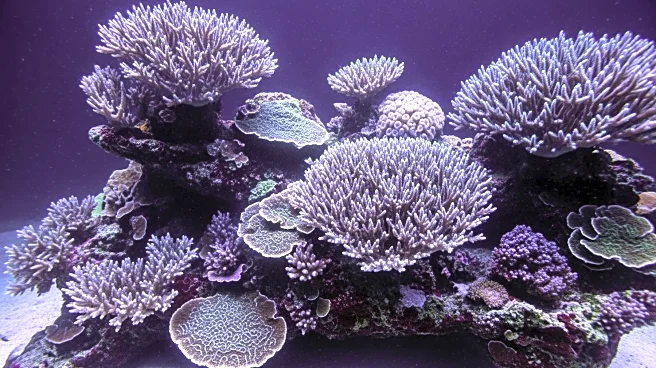
Researchers from the California Academy of Sciences have discovered at least 20 new species in the deep coral reefs of Guam, located up to 330 feet below the ocean surface. Using autonomous reef monitoring
structures (ARMS), the team collected data over several years, retrieving 2,000 specimens and identifying 100 species new to the region. The discoveries include potential new species of crabs, sponges, and corals. The research highlights the rich biodiversity of the 'twilight zone,' a challenging area to study due to its depth and pressure.
Why It's Important?
The discovery of new species in the deep ocean underscores the vast, unexplored biodiversity of Earth's marine environments. These findings contribute to our understanding of ocean ecosystems and the importance of preserving these habitats. The research emphasizes the need for continued exploration and protection of deep-sea environments, which are home to numerous undiscovered species. This work also highlights the role of advanced technology in uncovering the mysteries of the ocean, providing insights that could inform conservation efforts and biodiversity management.
What's Next?
The research team plans to continue their exploration, retrieving additional monitoring devices across the Pacific Ocean, including in Palau and French Polynesia. These efforts aim to further document and understand the biodiversity of deep coral reefs. The ongoing study will enhance our knowledge of marine ecosystems and support efforts to protect these critical habitats. The findings may also lead to new scientific inquiries into the adaptations and ecological roles of newly discovered species.