








What's Happening?
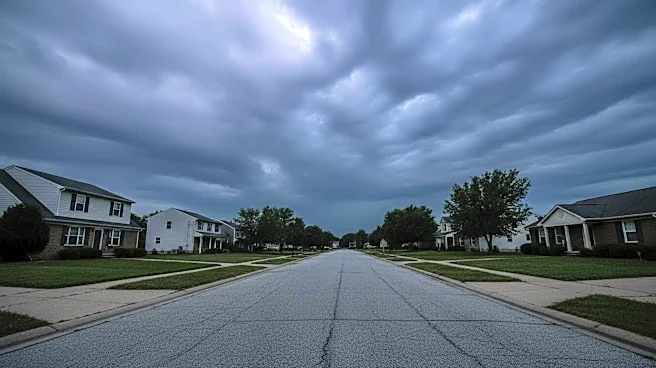
A severe heat wave over the Fourth of July weekend has caused significant damage to roads across the eastern United States. In Baltimore, a section of Interstate 97 experienced pavement buckling, leading to lane closures. Similar incidents were reported
in Chicago and other areas, where extreme temperatures caused roads to warp and crack. Experts attribute these failures to the effects of climate change, which is increasing the frequency and intensity of heat waves. The combination of prolonged high temperatures and heavy traffic exacerbates the problem, as roads expand and buckle under stress. This raises concerns about the resilience of U.S. infrastructure in the face of a warming climate.
Why It's Important?
The damage to roads highlights the urgent need for infrastructure adaptation to withstand the impacts of climate change. As extreme weather events become more common, the cost of maintaining and repairing roads is expected to rise significantly. This poses a challenge for state and federal transportation agencies, which must balance the need for durable infrastructure with budget constraints. The situation also underscores the importance of incorporating climate resilience into infrastructure planning and design. Failure to do so could lead to increased disruptions, economic losses, and safety hazards for motorists.
What's Next?
To address these challenges, engineers and policymakers must explore new materials and construction techniques that can better withstand extreme temperatures. This may include using more durable asphalt blends or reinforced concrete with improved expansion joints. Additionally, there is a need for comprehensive climate data to inform infrastructure design and planning. As the U.S. grapples with the realities of climate change, investments in resilient infrastructure will be crucial to ensuring the safety and functionality of transportation networks. Collaboration between government agencies, researchers, and industry stakeholders will be essential in developing effective solutions.