




What's Happening?
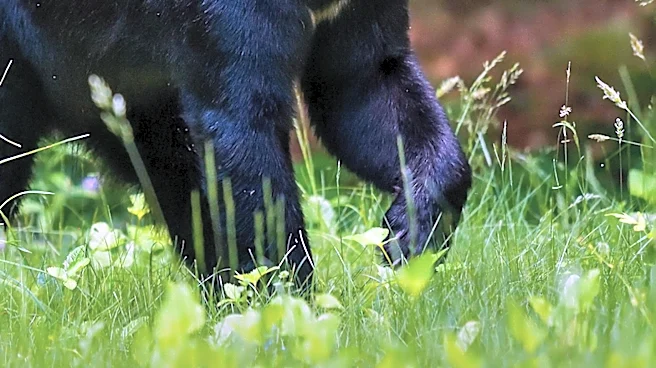
The Storey County Sheriff’s Office in Nevada has issued a public warning following reports of a bear attacking livestock in the Virginia City Highlands. Additionally, there have been multiple sightings of bears in the area. While specific details regarding
the livestock attack were not released, authorities are urging residents to take preventative measures. These precautions include securing attractants such as trash, closely supervising pets and children, and ensuring livestock is protected, particularly during nighttime hours. Residents encountering issues with bears are advised to contact the Nevada Department of Wildlife Bear Hotline at 775-688-2327.
Why It's Important?
This situation highlights the increasing human-wildlife conflict in areas where urban and wild environments intersect. The presence of bears attacking livestock and being sighted in residential areas poses a direct threat to public safety and property. For local residents, the economic impact of livestock loss can be significant, and the psychological impact of living in fear of wildlife encounters can be substantial. For wildlife management agencies, it underscores the ongoing challenge of balancing conservation efforts with public safety concerns. The need for residents to adopt preventative measures is crucial in mitigating these conflicts and ensuring the safety of both humans and animals. Effective communication and resources, such as the Nevada Department of Wildlife Bear Hotline, are vital for managing these interactions.
What's Next?
Authorities will likely continue to monitor bear activity in the Virginia City Highlands. The Nevada Department of Wildlife (NDOW) will be the primary agency responding to calls regarding bear encounters and providing guidance to residents. Increased public awareness campaigns on bear safety and attractant management are probable. Residents are expected to adhere to the recommended precautions, such as securing trash and protecting livestock, to reduce further incidents. Depending on the frequency and severity of future encounters, NDOW may implement additional measures, which could include trapping and relocating problem bears, or in extreme cases, euthanasia, though this is typically a last resort.
Beyond the Headlines
The recurring issue of bear sightings and attacks in residential areas points to broader ecological and societal shifts. As human populations expand and encroach upon natural habitats, wildlife is increasingly displaced, leading to more frequent interactions. This trend necessitates a re-evaluation of land use planning and wildlife corridor preservation. Furthermore, it raises questions about public education regarding coexisting with wildlife and the responsibility of individuals to minimize attractants. The incident also touches upon the ethical considerations of wildlife management, balancing the protection of endangered or threatened species with the safety and economic well-being of human communities. Long-term solutions will likely involve a combination of habitat management, public education, and responsive wildlife intervention strategies.