



What's Happening?
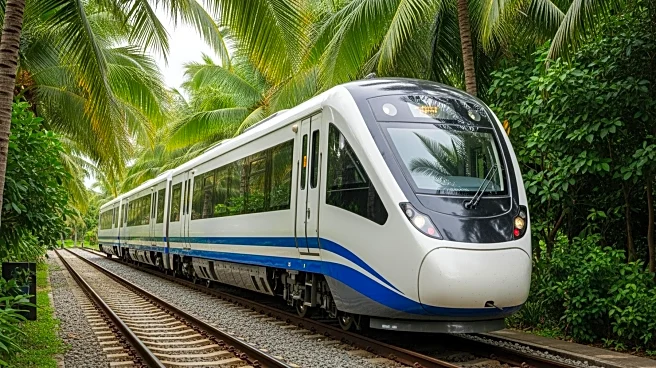
Sint Maarten has launched its first electric sightseeing train, marking a significant step towards sustainable tourism. The initiative, led by We Tour, aims to enhance mobility in Philipsburg while aligning with international Global Sustainable Tourism
Council (GSTC) standards. The electric train, unveiled at Port St. Maarten, is supported by major cruise companies and is expected to boost the local economy by bringing tourists directly into the capital's historic areas. The project is part of a broader sustainability roadmap by We Tour, which recently became the first GSTC-certified tour operator on the island. The train, with a range of 90 kilometers, will operate tours highlighting cultural and historical sites, promoting engagement with local businesses. Plans are underway to integrate solar charging by 2026, with a goal to transition the entire fleet to electric vehicles.
Why It's Important?
The introduction of the electric sightseeing train is a pivotal move for Sint Maarten's tourism sector, emphasizing environmental responsibility and innovation. This development not only aligns with global trends towards sustainable tourism but also positions Sint Maarten as a leader in the Caribbean for eco-friendly travel solutions. The initiative is expected to attract environmentally conscious travelers, thereby enhancing the island's competitiveness in the global cruise market. By reducing emissions and promoting sustainable practices, the project supports broader governmental policies aimed at lowering the island's carbon footprint. Additionally, the initiative benefits the local community through programs offering free rides to vulnerable groups, thus fostering social inclusivity.
What's Next?
Looking ahead, Sint Maarten plans to expand its sustainability initiatives by integrating solar charging infrastructure to support a fully electric fleet by 2026. This move is expected to further reduce emissions and enhance the island's appeal as a sustainable tourism destination. The government and We Tour will likely continue to collaborate with cruise lines and local businesses to strengthen the tourism corridor and ensure the economic benefits are widely distributed. As the island continues to innovate in sustainable mobility, it may serve as a model for other Caribbean nations seeking to balance tourism growth with environmental stewardship.