






What's Happening?
U.S. Energy Secretary Chris Wright stated this week that oil exports from the Middle East have rebounded to 15 million barrels per day (bpd), and on a recent Sunday, even surpassed the pre-conflict average of 20 million bpd. However, this claim is being
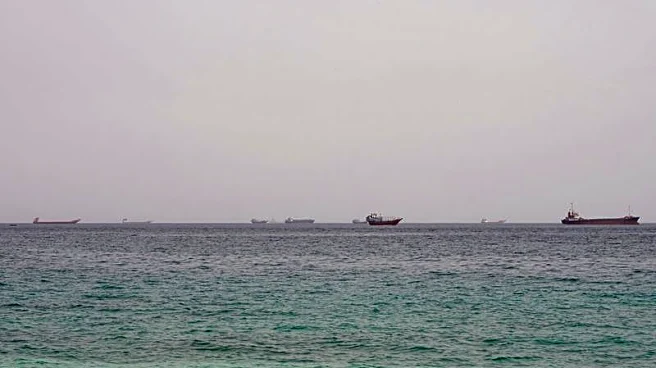
met with skepticism and confusion by vessel-tracking services and commodity analysts. These private businesses, which monitor tanker loadings and traffic in the region, report significantly lower figures. According to data compiled by Reuters columnist Clyde Russell, most vessel-tracking companies estimate only about 9 million bpd leaving the Middle East via all its export channels so far this month, indicating a gap of 3 million to 5 million bpd compared to the Secretary's figures. Matt Smith, director of commodity research at Kpler, expressed difficulty in reconciling the disparity between their observations and Secretary Wright's statements. The U.S. Energy Information Administration (EIA) also noted in its monthly Short-Term Energy Outlook (STEO) that traffic at the Strait of Hormuz remains 'severely constrained' throughout August.
Why It's Important?
The discrepancy in reported Middle East oil flow data has significant implications for global energy markets and U.S. energy policy. Accurate information on oil supply is crucial for assessing market stability, predicting price trends, and informing strategic decisions by governments and businesses. If oil flows are indeed lower than claimed by the U.S. Energy Secretary, it could signal tighter supply conditions, potentially leading to higher oil prices and increased gasoline costs for American consumers. This situation also raises questions about the transparency and reliability of official government data versus private sector intelligence. The Strait of Hormuz is a critical chokepoint for global oil shipments, and any perceived instability or misrepresentation of its traffic can impact investor confidence and geopolitical dynamics. The conflicting reports could also influence international relations, particularly concerning energy security and the U.S.'s role in the Middle East.
What's Next?
The accuracy of the U.S. Energy Secretary's claims regarding Middle East oil flows will likely be clarified in the coming five to six weeks as export data begins to appear in import records of various countries, as noted by Reuters' Russell. This will provide a more concrete picture of actual oil volumes. The ongoing divergence between official U.S. government statements and private ship-tracking data may prompt further scrutiny and calls for greater transparency regarding how the U.S. Department of Energy compiles and analyzes its information. The market will closely watch for any adjustments in oil prices or energy policy in response to these developments. If the lower figures from private analysts prove accurate, there could be increased pressure on the U.S. to address potential supply shortages or to re-evaluate its energy security strategies.
Beyond the Headlines
This situation highlights a broader challenge in the age of information: the potential for conflicting narratives between official government sources and independent data providers. The U.S. Energy Secretary's assertion that private businesses 'undercount' covert ship movements suggests a dimension of national security or strategic intelligence that may not be accessible to commercial entities. This raises questions about the balance between transparency and classified information in public discourse, especially when it impacts critical economic sectors. The incident could also fuel debates about the role of government in shaping market perceptions and the extent to which such actions are justified for national interests. Ultimately, the resolution of this data discrepancy will not only affect oil markets but also influence public trust in official pronouncements and the credibility of various data sources.