
What's Happening?
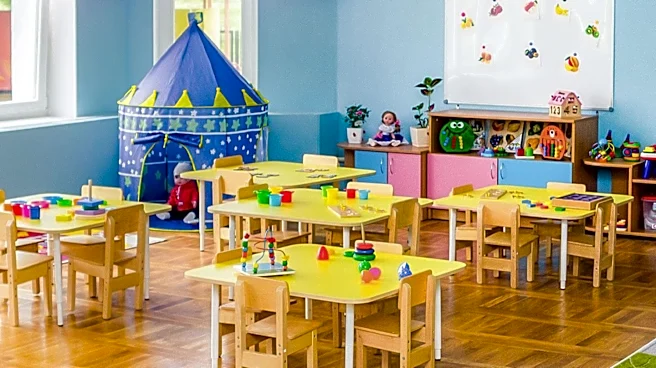
Minnesota has launched a new kindergarten assessment, the Minnesota Kindergarten Fall Assessment (MnKFA), which is being piloted in 70 public schools. This initiative aims to provide a comprehensive view
of kindergartners' readiness by observing them in their natural classroom environments rather than through traditional testing methods. The MnKFA focuses on four domains: language, literacy, and communication; foundational math; social and emotional development; and approaches to learning. This approach is designed to be more inclusive and developmentally appropriate, addressing criticisms of traditional assessments that are often seen as time-consuming and not suitable for young children. The assessment was developed following 2023 state legislation and is not intended as an accountability measure but as a tool to better understand and support students' developmental needs.
Why It's Important?
The introduction of the MnKFA is significant as it represents a shift in how educational readiness is assessed, moving away from standardized testing towards more holistic and observational methods. This change could influence educational practices by providing teachers with more relevant data to tailor their instruction to the developmental needs of their students. It also emphasizes the importance of social-emotional development and problem-solving skills, which are crucial for long-term academic success. By focusing on these areas, the assessment could help identify students who need additional support early on, potentially reducing educational disparities. The MnKFA's approach aligns with broader educational trends that prioritize developmental readiness over rote learning.
What's Next?
As the MnKFA is piloted, Minnesota will gather data to evaluate its effectiveness and make necessary adjustments. The results could lead to broader implementation across the state and potentially influence other states to adopt similar assessment models. Teachers and administrators will likely need training to effectively use the new assessment and integrate its findings into their teaching strategies. The pilot's outcomes will also inform discussions on educational policy and the role of assessments in early childhood education. Stakeholders, including educators, parents, and policymakers, will be watching closely to see how this new approach impacts student outcomes and educational equity.
Beyond the Headlines
The MnKFA could have long-term implications for how educational success is defined and measured. By focusing on developmental readiness, the assessment challenges the traditional emphasis on academic skills alone, promoting a more balanced view of child development. This could lead to changes in curriculum design and teaching methods, encouraging a more supportive and nurturing educational environment. Additionally, the assessment's focus on inclusivity and developmental appropriateness may prompt broader discussions about the role of standardized testing in education and its impact on young learners.