




What's Happening?
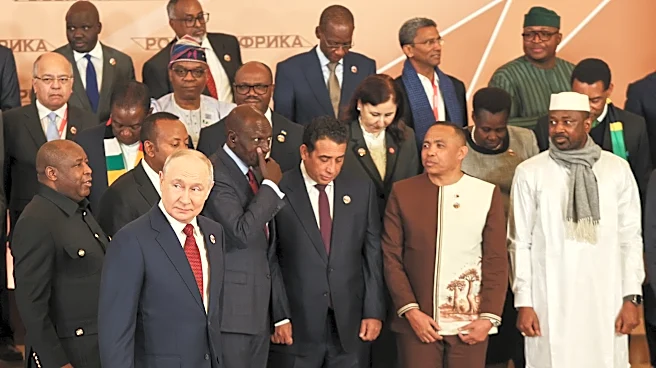
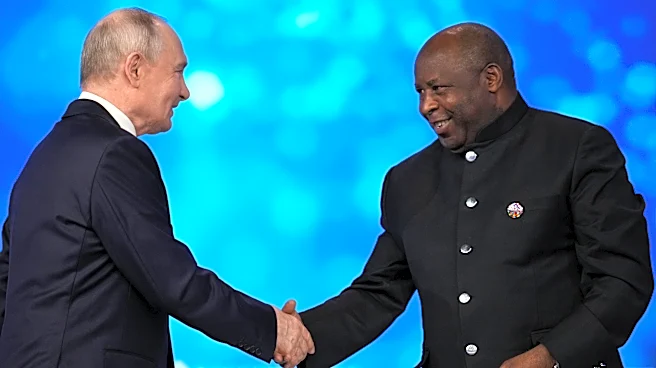
A video from the Russia-Africa summit has gone viral, showing African heads of state, including Kenya's President William Ruto, queuing for ice cream presented by Russian President Vladimir Putin. This informal moment occurred during a high-level diplomatic
event. Beyond this casual interaction, President Ruto held significant bilateral talks with President Putin in Moscow during the Third Russia-Africa Economic and Humanitarian Forum. The discussions primarily focused on expanding trade and investment between Kenya and Russia. Kenya is seeking broader markets for its agricultural exports, such as tea and coffee, and exploring partnerships in infrastructure, technology, and energy. The two leaders signed five memoranda of understanding on economic cooperation. President Ruto also commended President Putin for supporting reforms aimed at giving Africa a stronger voice in global governance.
Why It's Important?
The Russia-Africa summit and the bilateral talks between President Ruto and President Putin underscore Russia's strategic efforts to deepen its ties with the African continent. For Kenya, these discussions are crucial for economic development, offering potential new markets for its agricultural products and opportunities for investment in key sectors like infrastructure and technology. The signing of five memoranda of understanding signifies concrete steps towards enhanced cooperation. Furthermore, President Ruto's commendation of President Putin's support for African representation in global governance highlights a shared interest in a more multipolar world order, potentially shifting geopolitical alignments and influencing international policy discussions. The informal ice cream moment, while lighthearted, also serves to humanize diplomatic interactions, potentially fostering goodwill and easing tensions in formal settings.
What's Next?
Following the signing of memoranda of understanding, the next steps will involve the implementation of the agreed-upon economic cooperation initiatives. This includes efforts to expand trade in agricultural products like tea and coffee, and to develop partnerships in infrastructure, technology, and energy sectors. The discussions on giving Africa a stronger voice in global governance suggest ongoing diplomatic engagement on international reforms. The viral video of leaders queuing for ice cream, while a minor detail, could contribute to public perception of the summit and the leaders involved. The broader implications of these engagements will be observed in the coming months as the agreements are put into action and as Russia continues its outreach to African nations.
Beyond the Headlines
The casual interaction involving ice cream at a high-stakes diplomatic summit, while seemingly trivial, can be interpreted as a deliberate soft power tactic by Russia to foster a more approachable image and build rapport with African leaders. This contrasts with the formal and often rigid nature of international diplomacy. The broader context of Russia's engagement with Africa, including economic and humanitarian forums, suggests a strategic pivot to strengthen alliances and influence in a continent rich in resources and growing geopolitical importance. This engagement could have long-term implications for global power dynamics, potentially challenging traditional Western influence in Africa and opening new avenues for trade and political cooperation. The emphasis on expanding trade and investment, alongside support for Africa's voice in global governance, indicates a comprehensive approach to building lasting relationships.