






What's Happening?
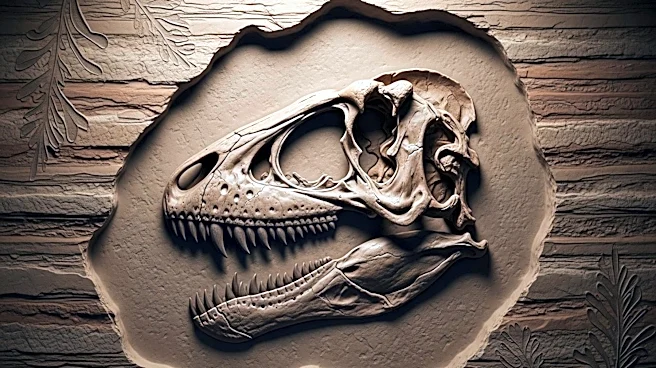
A new carnivorous dinosaur species, dating back more than three times earlier than Tyrannosaurus rex, has been discovered by a student at Virginia Tech. The fossil, initially dismissed due to its poor condition, was analyzed using advanced CT scanning
and digital reconstruction. This led to the identification of a previously unknown species, providing new insights into early dinosaur evolution. The project was led by Simba Srivastava, an undergraduate student, under the guidance of researchers Sterling Nesbitt and Michelle Stocker. The findings were published in Papers in Palaeontology.
Why It's Important?
This discovery is significant as it reshapes the understanding of early dinosaur evolution, particularly during the late Triassic period. The newly identified species, named Ptychotherates bucculentus, reveals unique anatomical features that suggest early dinosaurs were diversifying in unexpected ways. This challenges existing assumptions about dinosaur evolution and highlights the potential for overlooked fossils to provide valuable scientific insights. The involvement of an undergraduate student in such a significant discovery also underscores the importance of encouraging early involvement in scientific research.
Beyond the Headlines
The discovery of Ptychotherates bucculentus suggests that early carnivorous dinosaurs were experimenting with different forms and ecological roles long before their rise to dominance. This finding could lead to a reevaluation of the evolutionary timeline and the factors that contributed to the success of dinosaurs. Additionally, the use of modern imaging techniques in paleontology demonstrates the potential for new technologies to unlock scientific value from previously overlooked specimens, paving the way for future discoveries.