






What's Happening?
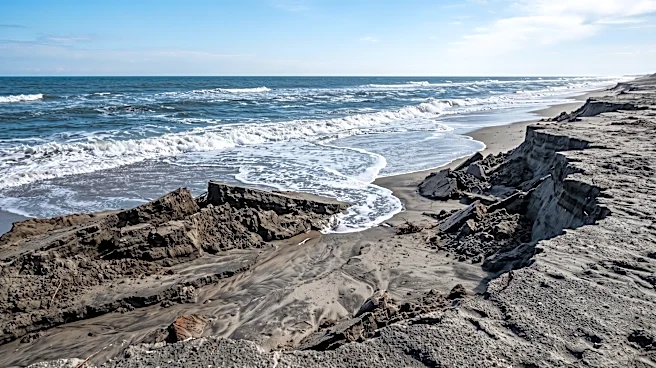
U.S. Representative Jeff Van Drew recently toured the Holgate beachfront in Long Beach Township, New Jersey, alongside Mayor James Mancini. During his visit, Representative Van Drew engaged in discussions regarding the provision of federal disaster assistance
for the town. The focus of these discussions was the erosion affecting the beachfront, indicating a need for federal intervention and support to address the environmental and structural challenges faced by the community. This engagement highlights the ongoing efforts by federal representatives to assess local needs and facilitate aid for areas impacted by natural processes or disasters.
Why It's Important?
The discussions surrounding federal disaster assistance for the Holgate beachfront are important for several reasons. Firstly, they underscore the critical role of federal government in supporting local communities facing significant environmental challenges like coastal erosion. Such assistance can be vital for funding protective measures, infrastructure repairs, and long-term resilience strategies, directly impacting the safety and economic stability of coastal towns. For residents and property owners in Long Beach Township, securing federal aid could mean the difference between recovery and prolonged vulnerability. Furthermore, these discussions set a precedent for how similar issues in other U.S. coastal regions might be addressed, influencing national policy on disaster preparedness and environmental protection. The involvement of a U.S. Representative also brings a higher level of visibility and urgency to the issue, potentially expediting the allocation of necessary resources.
What's Next?
Following Representative Van Drew's tour and discussions, the next steps will likely involve formal applications for federal disaster assistance by Long Beach Township, supported by the Congressman's office. This process typically includes detailed assessments of damage, cost estimations for proposed solutions, and bureaucratic navigation to secure funding. The outcome of these efforts will determine the scope and timeline of federal aid provided to address the beachfront erosion. Additionally, the issue may become a point of discussion in future legislative sessions, potentially influencing broader policy decisions related to coastal management and disaster relief funding across the United States. Local officials and residents will be closely monitoring these developments, as the timely allocation of funds is crucial for implementing effective protective measures.
Beyond the Headlines
Beyond the immediate need for disaster assistance, the situation at Holgate beachfront reflects a broader national challenge concerning coastal erosion and the impacts of climate change on U.S. shorelines. The ongoing discussions about federal aid highlight the increasing financial burden on the federal government to mitigate and adapt to environmental changes. This scenario raises deeper questions about sustainable development in coastal areas, the balance between economic interests and environmental preservation, and the long-term viability of certain coastal communities. It also prompts consideration of whether current federal disaster assistance frameworks are adequate for addressing persistent environmental threats, potentially leading to calls for more proactive and preventative national strategies rather than reactive aid. The ethical implications of rebuilding in vulnerable areas versus managed retreat are also implicitly part of this ongoing dialogue.