

What's Happening?
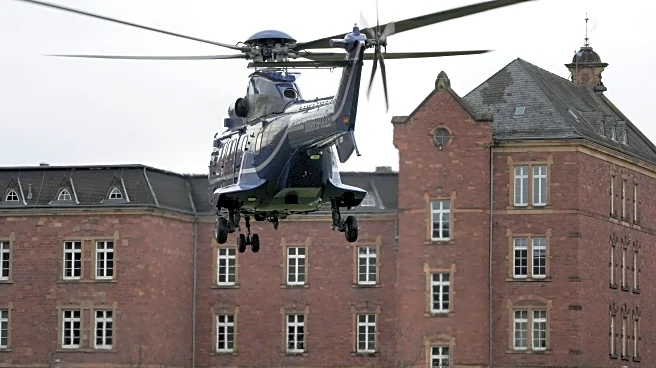
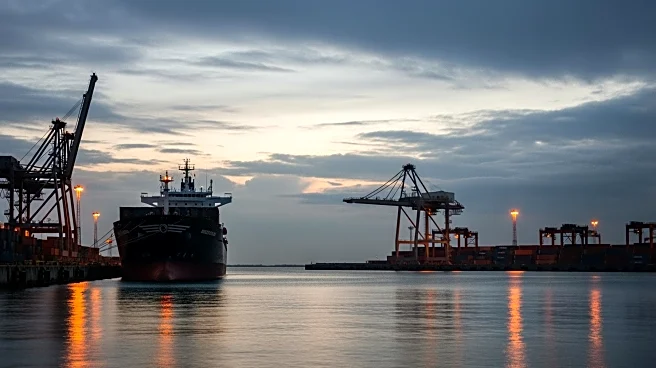
Estonian forces have detained a refrigerated containership, the Baltic Spirit, on suspicion of smuggling activities. The operation, conducted by the Estonian Tax and Customs Board along with police and navy units, involved boarding the vessel using a helicopter
and naval support. The ship, registered in the Bahamas and operated by Cool Carriers, was en route from Ecuador to St. Petersburg, Russia, and had stopped in Estonia for refueling. The crew of 23, all Russian nationals, are cooperating with the authorities. The ship is not under European Union sanctions and is not part of the Russian shadow fleet. The authorities are conducting a thorough inspection of the vessel, which includes checking numerous containers and potential hiding places for contraband.
Why It's Important?
This incident highlights ongoing international efforts to combat smuggling and enforce maritime security. The detention of the Baltic Spirit underscores the vigilance of Estonian authorities in monitoring vessels that pass through their waters, especially those with potential links to illegal activities. The operation reflects broader geopolitical tensions and the complexities of maritime trade routes, particularly those involving Russia. The cooperation of the Russian crew suggests a level of transparency, but the investigation's outcome could have implications for international shipping regulations and the operations of companies like Cool Carriers. The case also illustrates the challenges faced by customs and border agencies in preventing smuggling while maintaining the flow of legitimate trade.
What's Next?
The ongoing investigation will likely involve a detailed inspection of the ship's cargo and further questioning of the crew. Depending on the findings, there could be legal proceedings against those involved in the smuggling operation. The case may prompt increased scrutiny of vessels traveling similar routes, potentially affecting shipping schedules and operations. International stakeholders, including shipping companies and regulatory bodies, will be watching closely to see how Estonia handles the situation and whether it leads to changes in maritime security protocols.