







What's Happening?
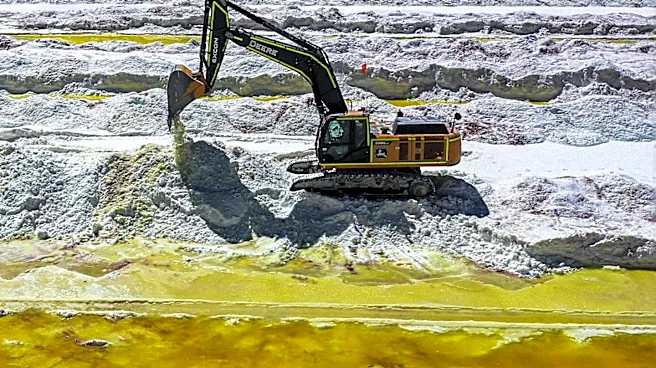
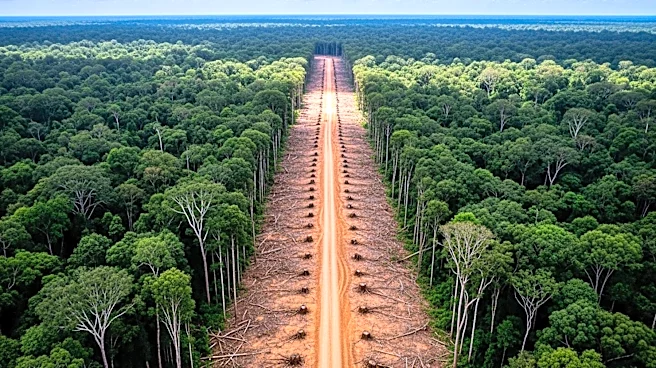
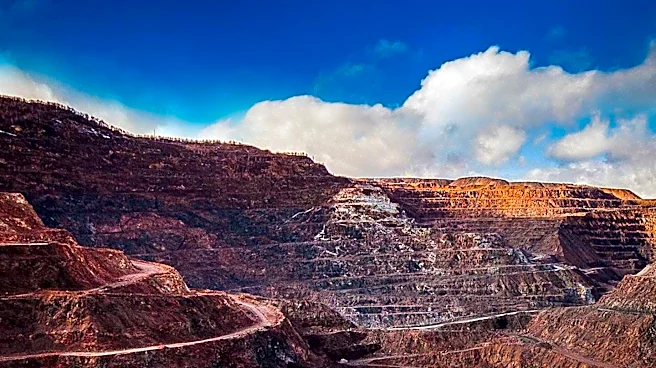
A study led by the University of Sheffield has found that infrastructure supporting industrial-scale mining in Africa is causing deforestation at a rate 34 times greater than the mines themselves. Between 2001 and 2020, 187,000 hectares of forest were
lost due to mining activities, equivalent to the size of Mauritius. The study highlights that the construction of roads, housing, and agricultural land to support mining operations is a major driver of deforestation. The research focused on mines extracting cobalt and copper, which are essential for renewable energy technologies and electronics.
Why It's Important?
The findings underscore the environmental impact of mining activities in Africa, particularly as global demand for minerals like cobalt and copper increases. These minerals are crucial for the transition to green energy technologies, yet their extraction is contributing to significant deforestation, threatening biodiversity and local ecosystems. The study calls for robust measures to limit deforestation linked to mining supply chains, emphasizing the need for sustainable practices in the industry. This has implications for global supply chains and the ethical sourcing of minerals used in everyday technology.
What's Next?
The study suggests the need for improved regulation and governance in the mining industry to mitigate environmental impacts. As demand for minerals is expected to increase significantly by 2040, there is a pressing need for policies that incorporate zero deforestation or no-net-loss supply chains. This could involve more comprehensive environmental impact assessments that consider the broader footprint of mining infrastructure. The study also highlights the importance of transparency and accountability in the mining sector to ensure sustainable practices.