



What's Happening?
The Occupational Safety and Health Administration (OSHA) implemented a rule in 2016 to reduce worker exposure to respirable crystalline silica, setting a permissible exposure limit of 50 micrograms per cubic meter of air over an eight-hour time-weighted
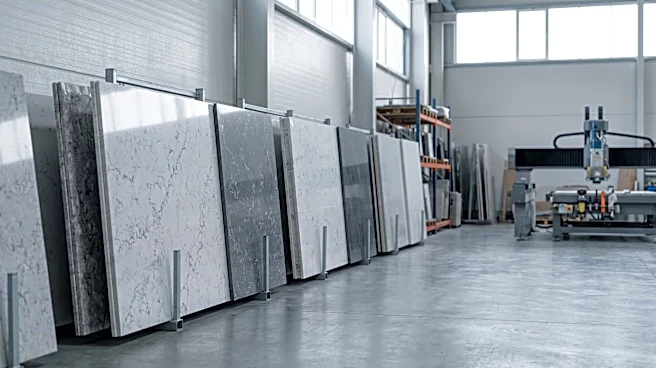
average. This rule aimed to prevent severe health issues such as silicosis, lung cancer, and kidney disease. Despite this regulation, workers in industries like countertop fabrication continue to develop and die from silicosis. Public health experts and former OSHA officials, including David Michaels, who served as assistant secretary of labor for OSHA from 2009 to 2017, indicate that the rule, while important, may not be sufficiently protective, especially given that artificial stone slabs can contain up to 90% silica. Furthermore, many small employers reportedly fail to comply with the existing standards. The rule faced industry pushback upon its implementation, with groups challenging its scientific basis in court.
Why It's Important?
The ongoing struggle with silicosis among workers, despite existing OSHA regulations, highlights significant gaps in occupational safety and public health protection in the U.S. The continued incidence of severe lung diseases underscores the challenges in enforcing and adequately designing regulations to protect workers from known hazards. The situation reveals a tension between industry interests, which have historically challenged stricter regulations, and the health and safety of the workforce. The economic implications include potential healthcare costs for affected workers and their families, as well as legal liabilities for manufacturers and distributors. The debate also touches upon the effectiveness of current regulatory frameworks and the need for potentially more stringent measures or even product bans, as suggested by some experts, to truly safeguard workers.
What's Next?
In response to the persistent issue, California's OSHA initiated rulemaking in May to prohibit the fabrication and installation of artificial stone products containing more than 1% crystalline silica. This move signals a potential shift towards more aggressive regulatory action at the state level. However, this proposed state rule has already met resistance from industry players, such as stone distributor Consentino, which argues the rule is based on inaccurate information and is not feasible. The outcome of California's rulemaking process could set a precedent for other states or influence future federal actions. Additionally, ongoing lawsuits against manufacturers and sellers of stone slab products by workers diagnosed with silicosis are likely to continue, further pressuring the industry and potentially leading to legislative efforts to either protect workers or shield companies from liability.
Beyond the Headlines
The situation surrounding silica exposure and silicosis extends beyond immediate regulatory compliance, touching upon deeper ethical and economic considerations. The industry's historical tactic of questioning scientific evidence to resist stricter regulations, as documented by David Michaels, raises concerns about corporate responsibility and the influence of industry lobbying on public health policy. The discussion in a congressional subcommittee about protecting stone slab manufacturers from litigation, rather than focusing solely on worker protection, highlights a potential conflict of interest in legislative priorities. This scenario also brings to light the broader issue of whether certain products, despite their economic value, should be restricted or banned if they pose an inherent and unmanageable risk to worker health, especially when safer alternatives exist.