
What's Happening?
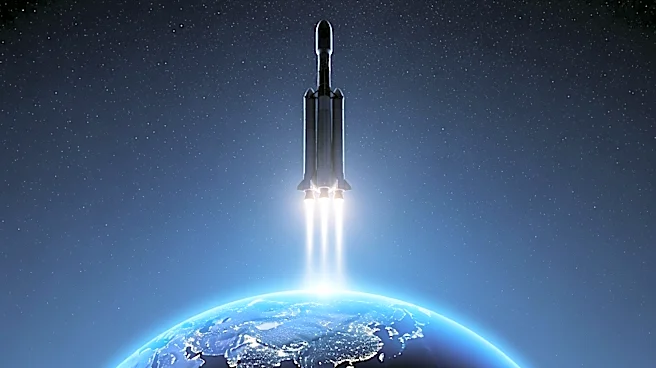
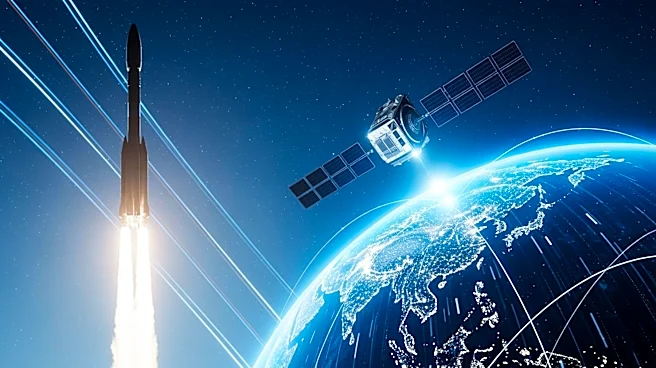
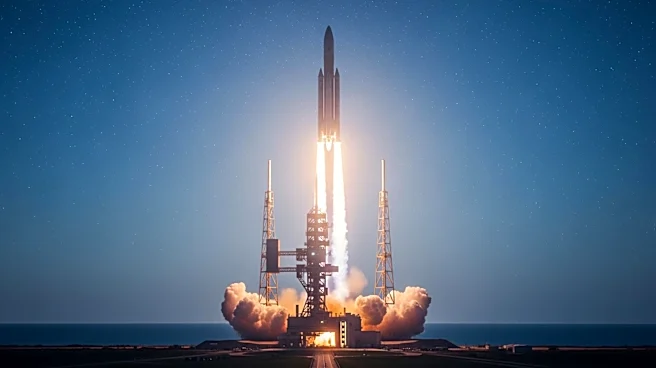
SpaceX successfully launched its Falcon Heavy rocket from Kennedy Space Center in Florida, carrying a Viasat broadband satellite into geosynchronous transfer orbit. The mission, known as ViaSat-3F 3, marks
the first Falcon Heavy launch from the Space Coast in over a year, with the previous launch occurring in October 2024 for NASA's Europa Clipper mission. The launch was initially delayed due to poor weather conditions but proceeded at 10:13 a.m. on April 29, 2026. The Falcon Heavy, composed of three Falcon 9 boosters, is notable for its powerful lift capabilities. Following the launch, the rocket's two side boosters returned to Cape Canaveral Landing Zones, creating twin sonic booms.
Why It's Important?
The successful launch of the Falcon Heavy is significant for both SpaceX and the broader aerospace industry. It demonstrates SpaceX's continued capability to deliver large payloads to orbit, which is crucial for commercial and governmental clients. The mission supports Viasat's efforts to expand broadband services, particularly in the Asia-Pacific region, enhancing global internet connectivity. Additionally, the return of the boosters showcases SpaceX's advancements in reusable rocket technology, which aims to reduce costs and increase the frequency of space missions. This launch also underscores the growing activity at Kennedy Space Center, a key hub for U.S. space operations.
What's Next?
SpaceX is expected to continue its busy launch schedule, with more missions planned for the Falcon Heavy and other rockets. The company aims to further develop its Starship program, which is central to its long-term goals of interplanetary travel. For Viasat, the successful deployment of the satellite will enable the company to enhance its broadband services, potentially leading to new partnerships and market expansion. The increased launch cadence at Kennedy Space Center may also prompt further infrastructure developments to support the growing demand for space missions.