






What's Happening?
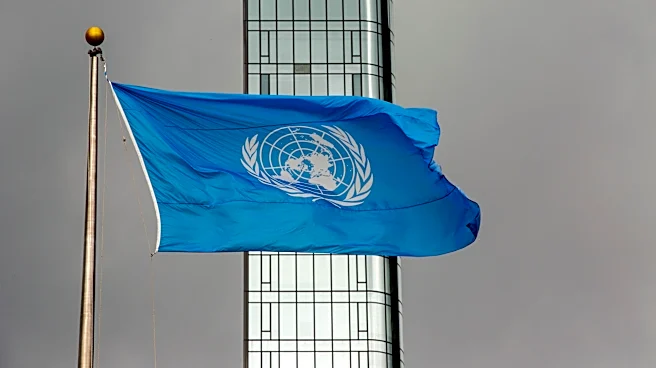
Global counterterrorism efforts are facing significant challenges due to geopolitical friction and structural gridlock among major powers. Despite numerous high-level multilateral forums, such as those organized by the United Nations General Assembly
and the G20, summit-level commitments often fail to translate into tangible outcomes on the ground. This disconnect arises because multilateral counter-terrorism mechanisms frequently break down due to deep strategic divisions, with permanent members of bodies like the United Nations Security Council using veto power or procedural holds to protect strategic proxies and allies from international sanctions. The international community also lacks a universally accepted legal definition of terrorism, further complicating unified action. This paradox, where one state's security threat is another's strategic asset, prevents the establishment of uniform legal standards and shared enforcement protocols, even impacting financial accountability frameworks like the Financial Action Task Force (FATF).
Why It's Important?
The persistent failure of global counterterrorism declarations to yield concrete results has significant implications for international security and stability. The continued use of non-state proxy networks by some states as a cost-effective instrument of statecraft undermines collective security. These proxy groups allow state actors to project influence, destabilize adversaries, and exert power across borders while maintaining plausible deniability, avoiding the high costs of direct military confrontation. This approach means that as long as states perceive the strategic benefits of proxy warfare to outweigh potential international political sanctions, high-level summit declarations will remain largely ineffective. For the U.S., this situation means that counterterrorism strategies must contend with a complex landscape where diplomatic consensus is often superficial, and underlying geopolitical rivalries continue to fuel instability and extremist activities in various regions.
What's Next?
Substantive progress in global counterterrorism will likely require a shift from broad global summits to more targeted, intelligence-driven bilateral and regional security architectures. These new frameworks would need to impose real economic and political costs for non-compliance to deter state-sponsored subversion effectively. Without such tangible consequences, global summit declarations will continue to serve primarily as political exercises rather than catalysts for actual security reform. Future efforts may focus on strengthening regional partnerships and intelligence sharing, bypassing the gridlock of larger multilateral bodies. Additionally, there may be increased pressure to develop more precise international legal definitions of terrorism and mechanisms for accountability that are less susceptible to geopolitical maneuvering.
Beyond the Headlines
The 'Global Summit Paradox' highlights a deeper ethical and practical dilemma in international relations: the tension between sovereign interests and collective security. While leaders publicly commit to eradicating terrorism, national security imperatives, electoral priorities, and strategic interests often take precedence over multilateral agreements once they return home. This dynamic reveals that international platforms are frequently used for public diplomatic signaling, projecting global leadership, and scoring diplomatic points, rather than for genuine operational enforcement. The long-term implication is a potential erosion of trust in international institutions and a growing skepticism about the efficacy of multilateral diplomacy in addressing complex global threats, pushing nations towards more unilateral or narrowly defined bilateral security arrangements.