


What's Happening?
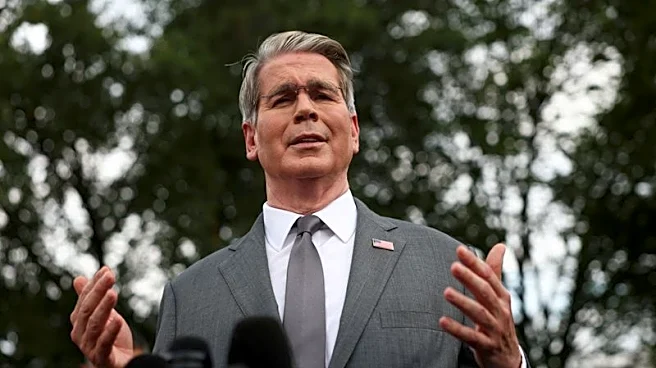
President Trump has launched a new economic campaign aimed at isolating Iran, promising the "most crushing economic operation ever waged against a country." This announcement, made on his Truth Social network, warns that any bank, company, airport, or administration
providing support to Iran will face "enormous economic consequences." President Trump also listed activities that "must stop now," including oil smuggling, swap lines, cash transfers, exchange offices, maritime registries, and shell companies. While the message is strong, the specific new measures remain undefined, as neither President Trump nor the White House has detailed them. This new push follows a period of military actions, where President Trump suspended strikes after two weeks of nocturnal attacks that failed to bring Iranian officials to the negotiating table. U.S. officials reportedly informed the President that American munition stocks were depleted and relevant targets were scarce. Iran's Foreign Minister, Abbas Araqchi, views this economic offensive as a diversion from U.S. financial difficulties, such as record debt and high interest rates, and has denounced it as "American economic terrorism" threatening the global economy and national sovereignty.
Why It's Important?
This new economic campaign against Iran signifies a significant escalation in U.S. efforts to exert pressure on Tehran, moving from military confrontation to a comprehensive financial and trade blockade. The broad scope of the threatened sanctions, targeting any entity globally that supports Iran, could have far-reaching implications for international businesses and financial institutions. Companies engaged in trade or financial transactions with Iran, even indirectly, face the risk of severe U.S. penalties, potentially forcing them to choose between access to the U.S. market and dealings with Iran. This strategy aims to further cripple the Iranian economy, which has already been weakened by previous sanctions since the U.S. withdrawal from the 2015 nuclear deal. The move also tests the resolve of U.S. allies and trading partners, particularly those like China, which is Iran's largest trading partner. The U.S. administration's willingness to impose secondary sanctions on foreign actors could create diplomatic tensions and disrupt global supply chains, impacting various industries dependent on international trade and finance. The effectiveness of this campaign will depend on the willingness of other nations to comply with U.S. demands, potentially reshaping global economic alliances and trade routes.
What's Next?
The immediate focus will be on the specifics of the new measures, which President Trump and the White House have yet to detail. The U.S. Treasury has been conducting "Operation Economic Fury" for months to cut off Tehran's funding, complemented by a naval blockade in the Strait of Hormuz to prevent Iranian exports. The new campaign is expected to intensify these efforts. The U.S. will likely target foreign entities that continue to facilitate Iranian trade, particularly those involved in oil smuggling and financial transactions. This could lead to increased scrutiny and potential sanctions against companies and countries, including China, which maintains significant trade ties with Iran. The timing is delicate, as Chinese President Xi Jinping is expected in the U.S. in September, and Washington is also seeking to stabilize its trade relationship with Beijing. Gulf countries, such as the United Arab Emirates, have already responded by suspending trade and financial exchanges with Iran following calls from President Trump. The U.S. military is also increasing its presence in the Strait of Hormuz, facilitating the passage of numerous vessels daily. The success of this campaign hinges on its ability to overcome Iran's established methods of circumventing sanctions and to secure broader international compliance.
Beyond the Headlines
President Trump's new economic offensive against Iran carries deeper implications beyond immediate trade and financial restrictions. It represents a strategic shift from direct military engagement to economic warfare, reflecting a preference for non-kinetic means to achieve foreign policy objectives. This approach raises ethical questions about the impact of broad sanctions on civilian populations and the potential for humanitarian crises. Legally, the extraterritorial application of U.S. sanctions, compelling foreign entities to comply with U.S. law, challenges principles of national sovereignty and international legal norms. Culturally, this aggressive economic posture could further entrench anti-American sentiment in Iran and among its allies, potentially fueling regional instability. The long-term shift could be a redefinition of global economic power dynamics, where the U.S. leverages its financial dominance to enforce its foreign policy agenda, potentially leading to a more fragmented global economic system as countries seek to reduce their vulnerability to U.S. sanctions. The campaign also highlights the ongoing struggle between the U.S. and Iran for regional influence, with economic pressure serving as a primary tool in this geopolitical contest.