







What's Happening?
Florida is currently experiencing its largest dengue outbreak in over 15 years, with more than 500 locally acquired cases reported this year. As of October 31, the state also recorded 382 international travel-associated cases. The Centers for Disease
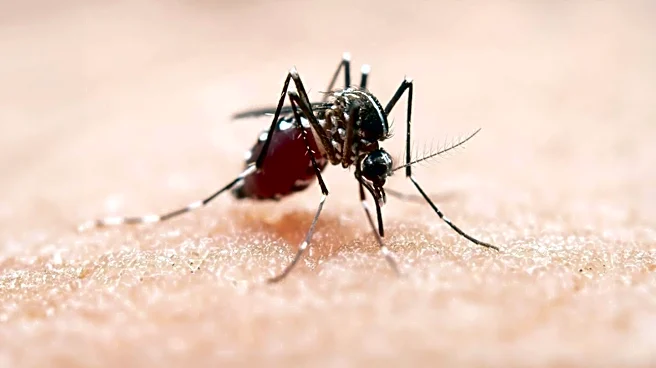
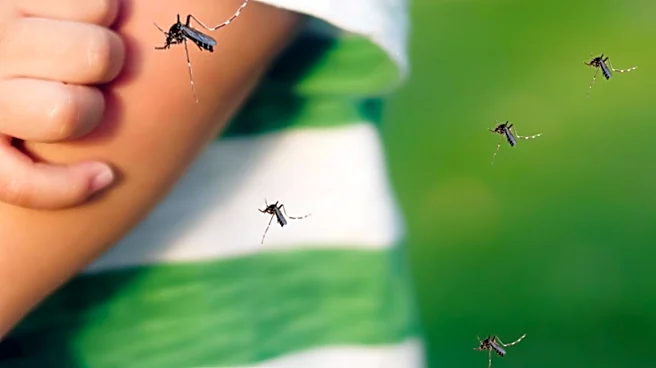
Control and Prevention (CDC) indicates that dengue fever is caused by any of four dengue viruses, transmitted by infected mosquitoes, and not spread person-to-person. While about three-quarters of infected individuals remain asymptomatic, symptoms typically appear 4-10 days after a mosquito bite and can include high fever, headache, nausea, vomiting, rash, and muscle pain. Severe dengue, which can be life-threatening, affects about 1 in 20 infected people. Florida's climate and environment provide ideal conditions for the Aedes species mosquitoes that transmit the virus.
Why It's Important?
The significant increase in locally acquired dengue cases in Florida poses a substantial public health challenge for the U.S. This outbreak highlights the vulnerability of certain regions to mosquito-borne diseases, especially those with climates conducive to mosquito breeding. The lack of a widely available vaccine and specific cure for dengue means that prevention and early detection are critical. The economic impact could include increased healthcare costs, potential disruptions to tourism, and resource allocation for mosquito control efforts. For U.S. public health policy, this situation may prompt a re-evaluation of mosquito surveillance, control programs, and public awareness campaigns, particularly in states with similar environmental conditions. The potential for severe dengue also underscores the need for rapid medical intervention to prevent life-threatening complications.
What's Next?
Florida health officials are actively implementing measures to control the outbreak, including aerial spraying of insecticides like Bti, a natural bacteria that kills mosquito larvae. Residents are urged to eliminate standing water around their homes, which serves as mosquito breeding grounds, and to use EPA-registered insect repellents. The CDC recommends rest, hydration, and acetaminophen for symptom management, while advising against aspirin and ibuprofen due to increased bleeding risk. Ongoing studies are being conducted to understand the factors contributing to the 2026 dengue activity in Florida. The situation may lead to enhanced public health advisories and increased funding for vector control and disease surveillance programs across the U.S., especially in states where Aedes mosquitoes are prevalent.
Beyond the Headlines
The Florida dengue outbreak serves as a stark reminder of the interconnectedness of climate, environment, and public health. The 'excessive rainfall' mentioned as a contributing factor points to the broader implications of changing weather patterns on disease vectors. This situation could accelerate research into more effective dengue vaccines and treatments, as well as innovative mosquito control technologies. Furthermore, it highlights the importance of international travel in disease transmission, as many initial cases are travel-associated. The long-term implications could include a shift in how U.S. communities prepare for and respond to emerging infectious diseases, emphasizing proactive environmental management and robust public health infrastructure to mitigate future outbreaks of climate-sensitive illnesses.