


What's Happening?
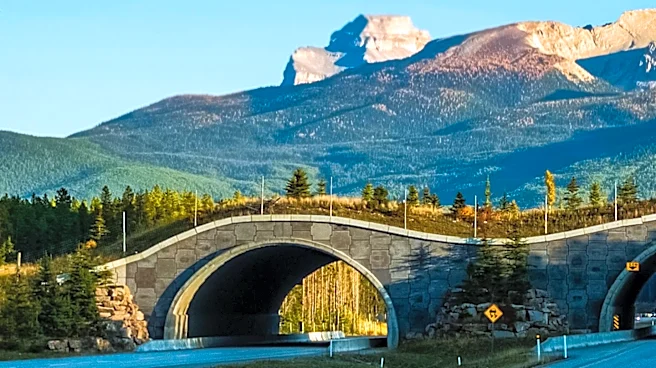
The I-25 Greenland Wildlife Overpass in Colorado, a $15 million project completed in December 2025, has led to a 91% reduction in animal-vehicle collisions along a stretch of Interstate 25 between Larkspur and Monument. This 209-by-200-foot bridge spans
six lanes of interstate traffic, connecting 39,000 acres of habitat. Designed in collaboration between state engineers and wildlife biologists, its primary goal is to facilitate safe passage for large animals like elk, mule deer, and pronghorn, which often avoid enclosed tunnels. Trail cameras have also captured smaller animals, including rabbits and northern leopard frogs, utilizing the crossing. The overpass is part of an 18-mile wildlife-mitigation system that includes five underpasses and fencing to guide animals away from traffic. The Colorado Wildlife and Transportation Alliance is currently studying the results to identify optimal locations for future crossings, with six more projects already in the design phase. Starting in January, Colorado drivers will have the option to contribute an additional $5 fee to fund these wildlife crossings.
Why It's Important?
This initiative is crucial for both wildlife conservation and public safety in the U.S. The significant 91% drop in animal-vehicle collisions demonstrates the effectiveness of such infrastructure in protecting wildlife and reducing risks for motorists. Animal-vehicle collisions can result in serious injuries or fatalities for humans, substantial vehicle damage, and the loss of wildlife. By providing safe passage, the overpass helps maintain ecological connectivity, allowing animals to move between fragmented habitats, which is vital for genetic diversity and population health. The success of the Greenland Wildlife Overpass offers a model for other states facing similar challenges, highlighting how integrated transportation and conservation strategies can yield substantial benefits. The voluntary $5 fee option for drivers also indicates a growing public and governmental commitment to environmental stewardship and road safety.
What's Next?
The Colorado Wildlife and Transportation Alliance will continue to analyze the data from the Greenland Wildlife Overpass to inform the design and placement of future wildlife crossings. Six additional projects are already in the design phase, including Colorado’s first overpass specifically for Rocky Mountain bighorn sheep. Starting in January, Colorado drivers will have the opportunity to contribute to the funding of these projects through an optional $5 fee. Researchers will also conduct long-term monitoring, including genetic studies of elk populations, to assess whether the crossings are effectively reconnecting animal populations and improving genetic diversity. Initial genetic results are anticipated in spring 2027. The ongoing success of these projects could influence national policy and encourage the implementation of similar wildlife-friendly infrastructure across other U.S. states.
Beyond the Headlines
The success of the I-25 Greenland Wildlife Overpass extends beyond immediate safety and conservation benefits, touching upon broader ethical and environmental considerations. It represents a proactive approach to mitigating human impact on natural ecosystems, acknowledging the intrinsic value of wildlife and the importance of biodiversity. The design, which mimics natural landscapes, reflects a deeper understanding of animal behavior and a commitment to creating solutions that animals will instinctively use. This project also highlights the potential for collaborative efforts between state agencies, environmental organizations, and the public to address complex challenges. The integration of such infrastructure into transportation planning signifies a shift towards more sustainable development practices, where economic growth and infrastructure expansion are balanced with ecological preservation. It sets a precedent for how future development can be harmonized with the natural world.