



What's Happening?
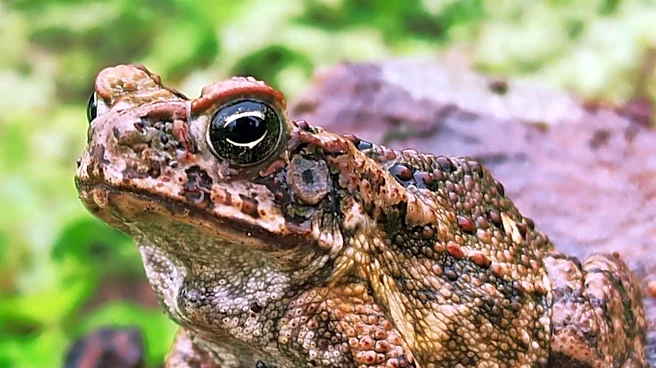
Researchers have identified a new species of extinct amphibian, the spadefoot toad Spea labreae, at the La Brea Tar Pits in Los Angeles. This discovery marks only the second extinct Pleistocene amphibian found in North America. The study, published in the Journal
of Vertebrate Paleontology, was led by Dr. Alberto Cruz, who identified the species while reviewing the Tar Pits' collection of amphibians and reptiles. The presence of S. labreae provides new insights into the climate and environmental conditions at the end of the last Ice Age. Amphibians, due to their sensitivity to environmental changes, serve as excellent indicators of past climates, making this discovery significant for understanding historical climate shifts.
Why It's Important?
The discovery of Spea labreae is significant as it enhances our understanding of the climatic and environmental conditions during the Pleistocene epoch. Amphibians like S. labreae are sensitive to environmental changes, and their presence can provide valuable information about past climates. This finding contributes to the broader narrative of how ecosystems responded to climate changes at the end of the last Ice Age. Additionally, the discovery underscores the importance of continued research and excavation at the La Brea Tar Pits, which remains a rich source of paleontological data. Understanding past climate changes can inform current climate models and help predict future ecological responses to ongoing climate change.
Beyond the Headlines
The discovery of S. labreae highlights the potential for finding more extinct species in the La Brea Tar Pits, which could further illuminate the region's paleoecological history. The study also emphasizes the role of small vertebrates in reconstructing ancient ecosystems, often overshadowed by larger, more iconic megafauna. This research could lead to a reevaluation of the diversity and complexity of Pleistocene ecosystems and their responses to climatic shifts. The findings may also inspire similar studies in other fossil-rich sites, potentially uncovering new species and contributing to the global understanding of prehistoric life.