






What's Happening?
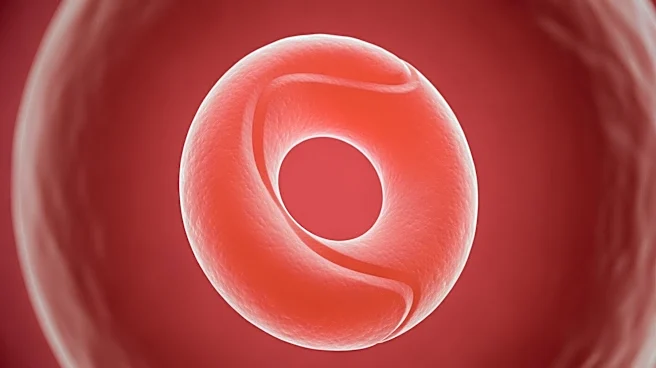
Researchers at the Feinstein Institutes for Medical Research have discovered that defects in different ribosomal proteins lead to Diamond-Blackfan Anemia Syndrome (DBAS) through distinct pathways. This congenital disorder results in severe anemia due
to the body's inability to produce enough red blood cells. The study, published in Nature Communications, highlights how two ribosomal proteins, RPS19 and RPL5, affect blood cell development differently. RPS19 issues lead to a reduction in early blood-forming stem cells through apoptosis, while RPL5 problems cause mature red blood cell precursors to die via ferroptosis. Both pathways involve the activation of the p53 gene, which can halt cell growth or trigger cell death. The research suggests that understanding these pathways could lead to more personalized treatments for DBAS patients.
Why It's Important?
This research is significant as it provides a deeper understanding of the genetic mechanisms behind DBAS, a rare and serious blood disorder. By identifying the distinct pathways through which ribosomal protein defects cause anemia, the study opens the door to developing targeted therapies. This could lead to more effective and personalized treatment options for patients, potentially improving their quality of life. The findings also contribute to the broader field of genetic research, offering insights into how ribosomal proteins regulate blood cell development and disease pathogenesis.
What's Next?
The next steps involve translating these findings into clinical applications. Researchers may focus on developing therapies that target the specific pathways identified in the study. This could involve further investigation into the role of the p53 gene and other genetic factors in DBAS. Additionally, clinical trials may be conducted to test the efficacy of new treatments based on these insights. The research also sets the stage for exploring similar genetic mechanisms in other blood disorders, potentially leading to broader applications in hematology.