



What's Happening?
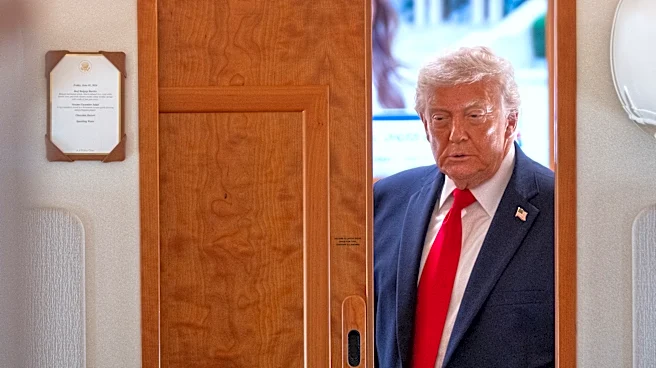
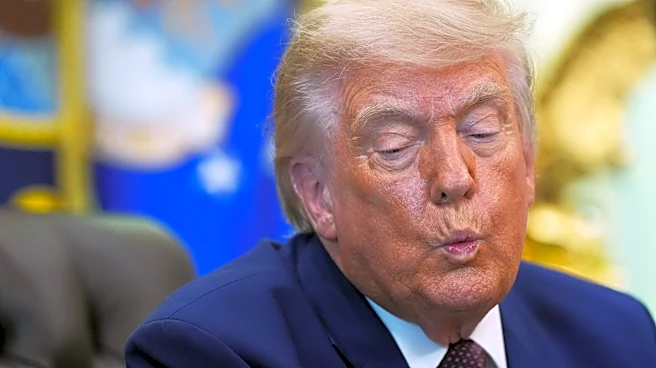
President Donald Trump delivered a speech at Custer Farms in Chippewa Falls, Wisconsin, where he linked domestic agricultural challenges to international geopolitical conflicts. Addressing a crowd of farmers and local leaders, Trump emphasized his administration's
'maximum pressure' strategy against Iran, highlighting the ongoing conflict's impact on global energy prices and domestic economic conditions. The President underscored the strategic importance of the Strait of Hormuz, where an Iranian blockade has significantly reduced oil tanker transits, exacerbating fuel shortages and increasing costs for American farmers. Trump also criticized China's role in the global energy market, accusing it of exploiting the situation to secure discounted Iranian oil. Additionally, he addressed the economic crisis in Cuba, attributing it to U.S. sanctions and military actions aimed at regime change.
Why It's Important?
The speech underscores the interconnectedness of domestic economic issues and international policy decisions. Trump's aggressive stance on Iran and China reflects a broader strategy to reshape global trade and security dynamics, which could have significant implications for U.S. economic stakeholders, particularly in the agricultural sector. The ongoing conflict with Iran has led to increased fuel prices and fertilizer shortages, directly impacting American farmers' operational costs. Trump's promise of potential government subsidies highlights the administration's attempt to mitigate these economic pressures. However, the speech also reveals a tension between the need for stable international markets and the administration's reliance on federal intervention, which could influence voter sentiment ahead of the midterm elections.
What's Next?
The administration's foreign policy approach suggests a continued focus on exerting pressure on Iran and China, with potential implications for global energy markets and U.S. economic conditions. Trump's mention of possible government subsidies indicates a short-term strategy to support domestic producers, but the long-term resolution of these geopolitical conflicts remains uncertain. The President's rhetoric suggests a willingness to escalate military and economic measures if diplomatic solutions fail, which could further strain international relations and impact global trade. The upcoming midterm elections will likely serve as a referendum on Trump's foreign policy and its domestic economic consequences, influencing future legislative and executive actions.